
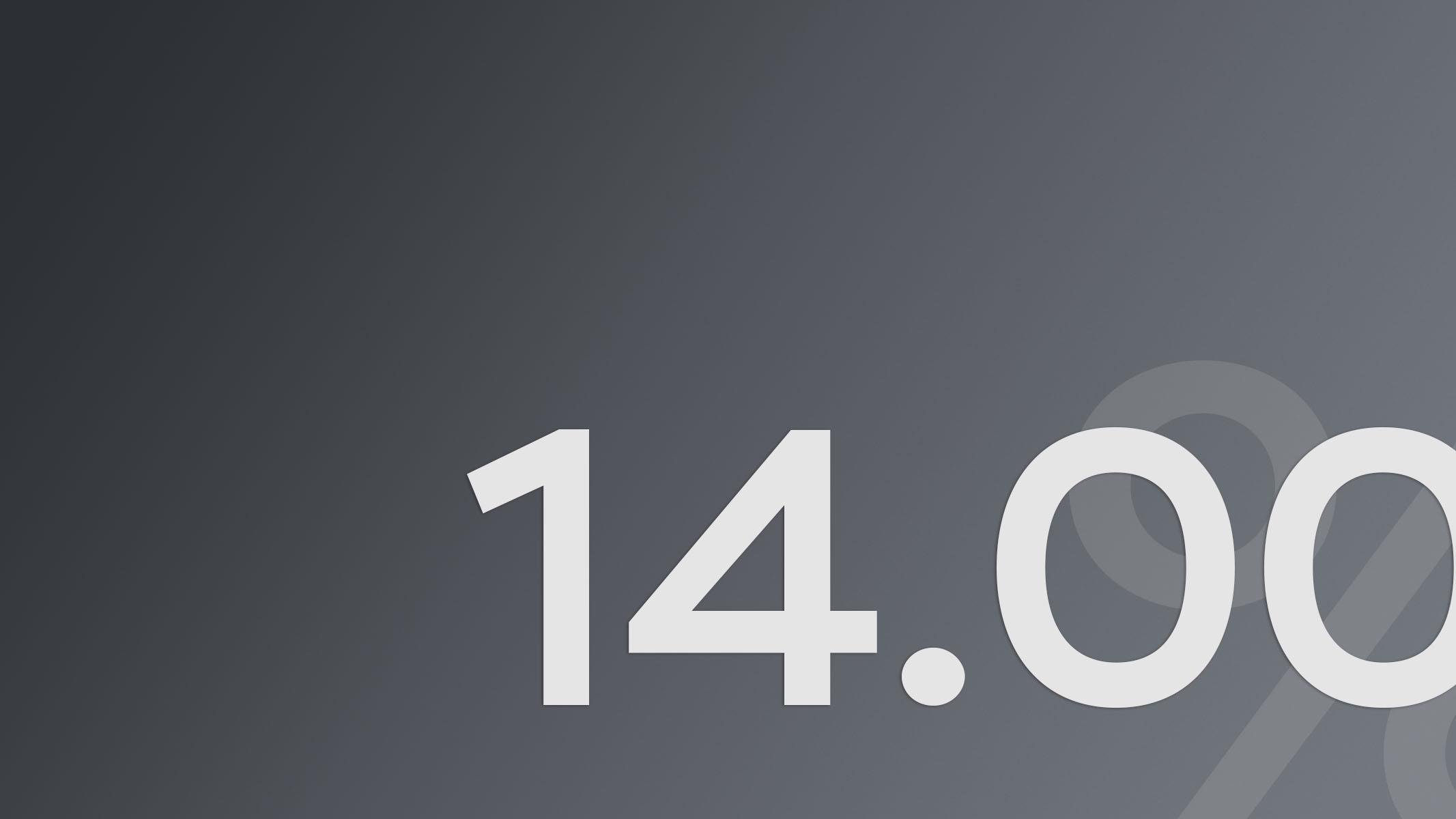
On 24 July 2026, the Bank of Russia Board of Directors decided to cut the key rate by 25 basis points to 14.00% per annum. In 2026 Q2, the economy as a whole was growing at a moderate pace. Considerable price growth and higher inflation expectations in the summer months were mainly associated with one-off factors. Measures of underlying inflation remain within the range of 4–5% in annualised terms. Lending growth decelerated slightly in June. Companies significantly decreased their expectations of future demand and output. Nevertheless, given the direct and second-round effects of the temporary decline in production capacities in certain sectors and more expansionary fiscal policy over a three-year horizon than projected in April, a smoother key rate decrease is required.
The Bank of Russia will make further key rate decisions based on the dynamics of inflation and inflation expectations as well as the analysis of risks posed by domestic and external conditions. The baseline scenario assumes that the key rate will average 14.5–14.6% per annum in 2026 and 10.5–12.5% per annum in 2027. The Bank of Russia forecasts that due to the considerable rise in fuel prices, annual inflation will be 6.0–7.0% in 2026. Given the monetary policy stance, in 2027 and beyond, annual inflation will stay on target.
In 2026 Q2, the current seasonally adjusted price growth averaged 5.0% in annualised terms compared to 8.7% in 2026 Q1 and 4.3% in 2025 Q4. On average, the similar indicator of core inflation was down to 4.2% from 6.2% in 2026 Q1 and 4.9% in 2025 Q4. Current price growth sped up in June–July. Price dynamics in recent months were considerably affected by volatile components, including motor fuel, fruit and vegetables. Measures of underlying inflation remained within the range of 4–5% in annualised terms. As of 20 July, annual inflation stood at 5.9%.
Inflation expectations of households, businesses, and financial market participants went up. If they remain elevated, this may impede a sustainable slowdown in inflation.
According to high-frequency data, the economy as a whole grew moderately in 2026 Q2. Economic growth was mainly driven by consumer demand. Investment activity recovered somewhat but remained moderate overall. However, the impact of the temporary contraction in production capacities on output in certain sectors increased since June. Businesses’ expectations of future demand and output dropped over the past month. Among other things, this may indicate a slowdown in consumption growth in 2026 H2. Overall, the 2026 GDP growth forecast was revised downwards to 0.0–1.0%. The 2027–2028 forecast was not changed.
The labour market tightness was gradually easing. According to survey data, business staffing levels increased. Companies’ plans for wage indexations in 2026 barely changed. Wage increases slowed but continue to outpace labour productivity growth. Unemployment stays at its record lows.
Monetary conditions are assessed as moderately tight. Interest rates rose in most segments of the financial market. Taking into consideration rising inflation expectations, monetary conditions eased somewhat in real terms. Non-price bank lending conditions are still tight.
Lending activity slowed in June mainly due to corporate lending dynamics. Contrastingly, the growth of the corporate loan portfolio sped up. Households’ propensity to save edged down.
Proinflationary risks still prevail over disinflationary ones on the medium-term horizon. The key proinflationary risks are associated with larger second-round effects from the temporary shutdown of production capacities in certain sectors. They may arise due to a more notable pass-through of costs to prices and high inflation expectations. Proinflationary risks associated with a long period of wage growth outpacing productivity growth as well as with a deterioration in the global economic outlook and rising global price pressures amid geopolitical tensions are still in place. Disinflationary risks involve a more significant slowdown in domestic demand.
The Bank of Russia’s July baseline scenario assumes a gradual decrease in the structural primary budget deficit to zero in 2029. Fiscal policy parameters, including the trajectory of returning to a zero structural balance, will be further detailed in the October forecast after the Government submits new medium-term budget projections to the State Duma. If these projections assume a higher structural primary budget deficit, a tighter monetary policy stance than assumed in the current baseline scenario may be required.
Following the Board of Directors’ key rate meeting on 24 July 2026, the Bank of Russia has updated its medium-term forecast.
On 5 August 2026, the Bank of Russia releases the Summary of the Key Rate Discussion and the Commentary on the Medium-term Forecast.
The Bank of Russia Board of Directors holds its next key rate meeting on 11 September 2026. The press release on the Bank of Russia Board decision is to be published at 13.30 Moscow time.
The reference to the Press Service is mandatory if you intend to use this material.
24.07.2026 13.30.00