
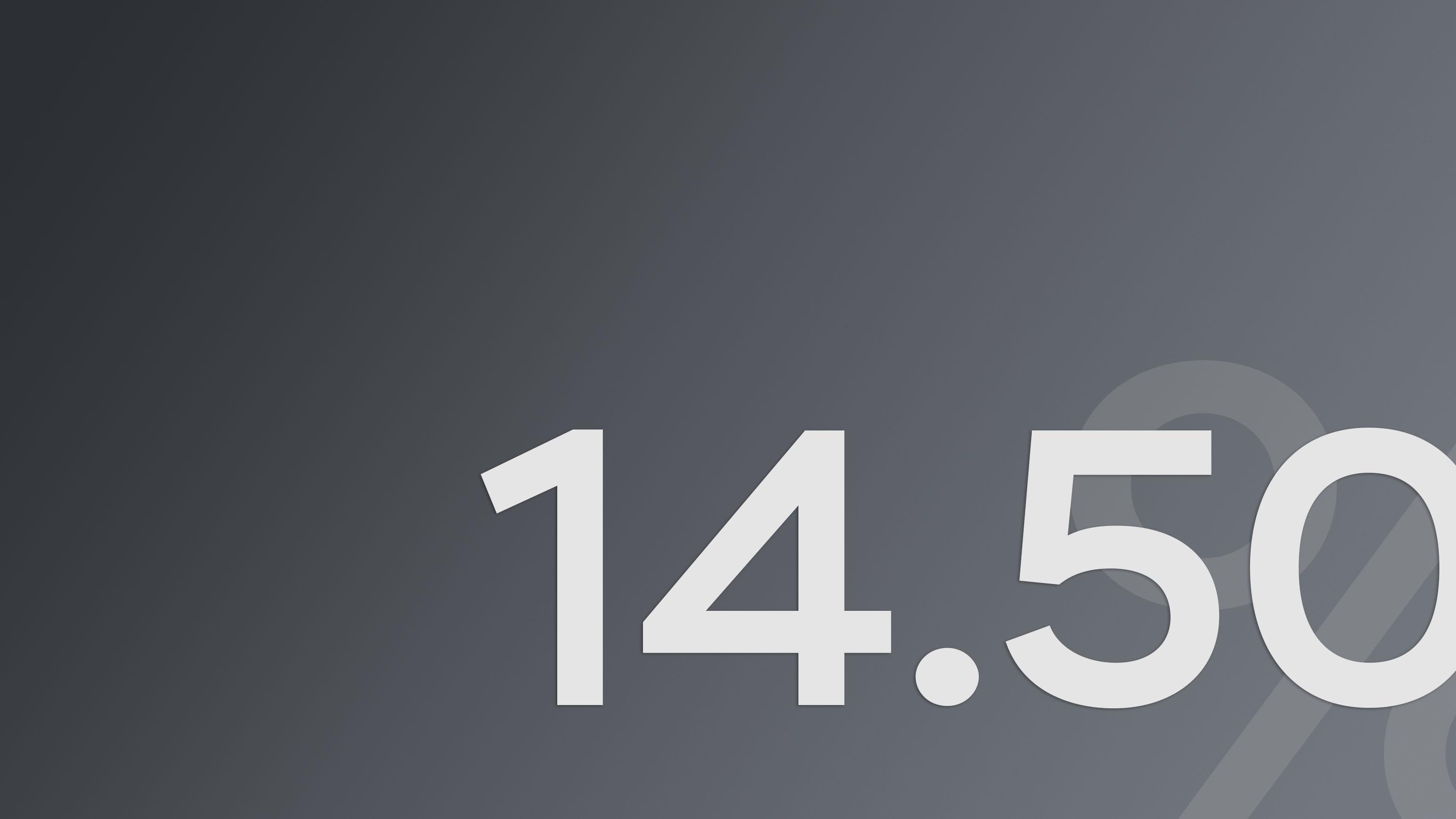
On 24 April 2026, the Bank of Russia Board of Directors decided to cut the key rate by 50 basis points to 14.50% per annum. Domestic demand dynamics have roughly corresponded to the economy’s capacity to ramp up supply of goods and services. However, measures of underlying price growth have not yet decreased and remain in the range of 4–5% in annualised terms, as estimated by the Bank of Russia. There is still significant uncertainty regarding the external environment and fiscal policy parameters.
The Bank of Russia will assess the need for further key rate cuts at its upcoming meetings depending on the sustainability of the inflation slowdown, the dynamics of inflation expectations, and the analysis of risks posed by external and domestic conditions. The baseline scenario assumes an average key rate in the range of 14.0–14.5% per annum in 2026 and 8.0–10.0% per annum in 2027. According to the Bank of Russia’s forecast, given the monetary policy stance, annual inflation will decline to 4.5–5.5% in 2026. Underlying inflation will be close to 4% in 2026 H2. In 2027 and beyond, annual inflation will stay on target.
In 2026 Q1, the current seasonally adjusted price growth averaged 8.7% in annualised terms compared to 4.4% in 2025 Q4. The similar indicator of core inflation averaged 6.3% after 5.0% in the previous quarter. Such dynamics were caused by one-off factors (primarily the VAT increase and the indexation of administered prices and tariffs). Excluding these factors, underlying price growth has not changed and is generally assessed at 4–5% in annualised terms. As of 20 April 2026, annual inflation stood at 5.7%.
Inflation expectations have changed diversely since March. Households’ inflation expectations declined. Businesses’ price expectations barely changed. Financial market participants’ expectations edged up. In general, expectations for future inflation remain elevated. This may impede a sustainable slowdown in inflation.
According to high-frequency data, the Russian economy slowed in 2026 Q1, in part due to the adjustment to the earlier tax changes. The other contributors were a fewer number of business days and unfavourable weather conditions. Investment activity remains subdued. Consumer demand growth continues to decelerate, despite a slight pick-up in March. Taking into account that economic activity dynamics in 2026 Q1 were largely driven by one-off factors, the Bank of Russia has retained its GDP growth forecast for 2026 at 0.5–1.5%.
The labour market tightness is gradually decreasing. According to surveys, the percentage of enterprises experiencing labour shortages continues to shrink and is now at its lowest level since mid-2023. Companies are planning more moderate wage indexations in 2026 compared to 2023–2025. Meanwhile, unemployment remains at historical lows, and wage growth is still outpacing growth in labour productivity.
Monetary conditions have eased somewhat but remain tight. Interest rates have declined in most segments of the financial market. Non-price bank lending conditions are still tight.
Lending activity is moderate. Among other things, this is due to the record-high advance funding of government spending in 2026 Q1. Households generally continue to demonstrate a high propensity to save.
Proinflationary risks still prevail over disinflationary ones on the
The Bank of Russia takes into account the announced parameters of fiscal policy. They imply that fiscal policy will help slow down inflation on the
Following the Board of Directors’ key rate meeting on 24 April 2026, the Bank of Russia has updated its medium-term forecast.
On 7 May 2026, the Bank of Russia releases the Summary of the Key Rate Discussion and the Commentary on the Medium-term Forecast.
The Bank of Russia Board of Directors holds its next key rate meeting on 19 June 2026. The press release on the Bank of Russia Board decision is to be published at 13.30 Moscow time.
The reference to the Press Service is mandatory if you intend to use this material.
24.04.2026 13.30.00