
Discussants: members of the Bank of Russia Board of Directors, senior executives of the Monetary Policy Department, the Research and Forecasting Department, and other Bank of Russia Departments and Main Branches.
The Monetary Policy Department together with the Research and Forecasting Department presented the results of the analysis of the current economic developments nationwide and worldwide, as well as the suggestions regarding the baseline macroeconomic forecast for 2026–2028 and its variations. The Bank of Russia Main Branches provided information on the situation in the Russian regions, including based on business surveys. Furthermore, the participants in the discussion considered the information from the Financial Stability Department and the International Settlements Department.
The discussants’ opinions are based on the data available as of 24 April 2026.
This Summary covers the key points of the discussion.
 Economic situation and inflation
In 2026 Q1, current price growth accelerated to 8.7% on average (seasonally adjusted annualised rate, SAAR) from 4.4% SAAR in 2025 Q4. Core inflation over the same period sped up to 6.3% SAAR on average from 5.0% SAAR in 2025 Q4. Households lowered their inflation expectations in April 2026, while businesses’ price expectations remained virtually unchanged. Analysts adjusted their inflation forecasts for 2026–2027 slightly upwards. High-frequency data show a slowdown in the Russian economy in 2026 Q1. The Bank of Russia’s Business Climate Index rose in April following its decline in 2026 Q1. Unemployment stayed at its record low of 2.1% (seasonally adjusted, SA) in February 2026. The growth rates of nominal and real wages went up year on year in January 2026.
In 2026 Q1, current price growth accelerated, while running below the Bank of Russia’s February estimates. According to the meeting, the 2026 Q1 inflation increase was transitory and primarily attributable to the rise in VAT and the indexation of administered prices and tariffs. No signs of significant second-round effects of these factors were observed, with their impact translating into prices mostly in 2026 Q1. Having analysed the estimates provided by the Bank of Russia Departments, the participants agreed that the contribution of higher VAT to the annual price growth rate was around 1 pp.
Current price growth in 2026 Q1 was slower than expected in February, largely due to the dynamics observed in January when prices for fruit and vegetables as well as other volatile components were rising at a lower rate than suggested by weekly data for January. In February–March, current price growth was, on the contrary, slightly higher than estimated by the Bank of Russia, driven by new supply-side factors. Namely, the conflict in the Middle East resulted in the reorientation of tourist flows, pushing up tourism prices. Growing retail prices for petrol were a source of additional pressure. Nevertheless, the discussants pointed out that the increase in global prices for petroleum products would have a limited effect on the domestic market as it was largely offset by the influence of the damper mechanism and export restrictions.
The discussion again focused on the estimates of underlying inflationary pressures.
- Most participants believed that, excluding the contribution of higher VAT and other one-off factors, underlying inflation had not changed in 2026 Q1 as compared to 2025 Q4, ranging from 4% to 5% SAAR. According to them, price dynamics in 2026 Q1 were affected by the overheating of demand during the past periods, considering the transmission lags. This was also the reason why inflation expectations remained elevated. That said, the slowdown in domestic demand growth observed in 2026 Q1 and the accumulated monetary tightness should produce a disinflationary effect and ensure the return of underlying inflation to 4% in 2026 H2. Certain discussants argued that underlying inflation had already approached 4% SAAR in 2026 Q1.
- According to some participants, underlying inflation was closer to 5% or even higher in 2026 Q1. They pointed to the sector of market services where price growth rates remained high and noted that the movements of prices for market services predominantly reflected underlying price pressures. According to the discussants, in February–March, current price growth rates in annualised terms remained comparable to annual ones, whereas they should be lower in order to achieve sustained disinflation. Although demand cooled down in 2026 Q1, it is to pick up in the next few quarters, and therefore, disinflation might go more slowly than expected or even come to a halt.
Inflation expectations remained elevated. Although households’ and businesses’ expectations had decreased since the beginning of the year, they stayed close to the levels observed in 2025. The participants discussed the extent to which the dynamics of inflation expectations could hamper disinflation. According to some of them, inflation expectations staying elevated despite considerable disinflation since early 2025 is a worrying sign as they might hinder a further slowdown in underlying inflation in the conditions of monetary policy easing. Other discussants argued that it is natural for inflation expectations to remain heightened after a prolonged period of accelerating inflation. They highlighted the subdued response of inflation expectations to the increase in VAT and suggested that they could be expected to lower as price growth resumes a downward trend, thus supporting disinflation and contributing to the stabilisation of inflation at the target.
In 2026 Q1, economic activity slowed down more notably than expected by the Bank of Russia in its February forecast. The weaker dynamics were associated with transitory factors – calendar effects and cold weather – as their impact turned out to be more pronounced than expected. The first two months of the year had three fewer business days than January–February 2025, which accounted for a 0.5 pp decrease in annual GDP growth rates in 2026 Q1. The meeting hypothesised that the economy’s responsiveness to the calendar factor could increase as the proportion of companies with a continuous production cycle could have contracted over recent years, resulting in a more pronounced effect of a lower number of business days in early 2026 on output than estimated in February. The weather conditions had a substantial effect on the situation in a number of industries. In contrast to last year when the construction sector recorded high activity due to the warm winter, the abnormal frosts and snowfalls of early 2026 led to downtime and a slowdown in construction.
The participants concurred that it would only be possible to assess economic activity more accurately as of the end of 2026 H1. They noted that output fluctuations within 2026 Q1 were largely attributable to the impact of transitory factors, which materialised statistically as weaker dynamics in January–February and an upturn in March. However, the March indicators could broadly reflect that these factors’ effects had faded, rather than evidence any improvement in economic activity per se. The discussants also noted that in 2026 Q2, the calendar factor will have the opposite effect: May–June will have three more business days than a year earlier. That said, economic dynamics in 2026 Q2 will be influenced by competing factors. On the one hand, the economy may be supported by growing export revenues, driven by more expensive commodities, and a temporary easing of external restrictions. On the other hand, a number of industries are still facing uncertainty regarding the scale of temporary production downtime, which might hold back the economic rebound to a certain extent.
In 2026 Q1, consumer activity came in below the level of 2025 Q4, pushed down by tight monetary conditions and a higher tax burden. In January–February, demand decreased, including due to the front-loading of purchases, typically made at the beginning of the year, in late 2025 (in anticipation of the increases in VAT, excise duties, and fees). In March, consumer activity bounced back partially, while car sales soared. Overall, consumption growth in 2026 Q1 remained more moderate year on year.
Investment activity dropped in 2026 Q1. Companies adopted a more cautious approach to launching new investment projects and were revising their investment expansion plans downwards. According to the meeting, companies were more modest in planning investments at the beginning of the year, as usual, but upgraded their plans later, which frequently resulted in final values being higher than preliminary estimates.
The labour market demonstrated more pronounced signs of easing. Businesses’ recruitment and wage indexation plans for 2026 became more moderate. The proportion of companies experiencing labour shortages decreased, hitting its lowest values since 2023 Q2. Vacancies were closed within a shorter time as compared to 2023–2025. This indicated a gradual easing of the pressure put by the labour market on businesses’ costs. However, the labour market remained tight. Unemployment stayed at its record low, while the growth rate of wages was persistently higher than that of labour productivity.
The meeting discussed the mechanism of the labour market adjustment to the economic slowdown. Although staff shortages are becoming less acute, many companies are still lacking personnel. At the same time, others are reluctant to lay off workers. In previous years, they faced labour shortages and are now seeking to retain staff even amid lowering demand for their products as they fear difficulties in restoring headcount in the future. As a result, the distribution of workforce is not efficient enough. Some companies recording rising demand and ready to ramp up output are unable to do so because of labour shortages, while others continue incurring costs due to personnel retention. In this context, the labour market adjusts primarily through a slower rise in wages and bonuses as well as expansion of part-time employment. This means that the labour market’s return to its balanced state is protracted and uneven, with the response of employment and unemployment to the economic slowdown lagging even more than in previous cycles.
The federal budget deficit was large in 2026 Q1 due to record-high budget spending. The participants pointed out that such expenditure dynamics might be a signal of a stronger fiscal impulse as of year end than assumed in the baseline scenario. A similar situation was also observed before, when the active advanced funding of budget expenditures at the beginning of the year resulted in a higher trajectory of budget spending across the year as a whole. This increases the likelihood of fiscal policy failing to produce the expected disinflationary effect in 2026.
Most discussants agreed that the positive output gap had closed in 2026 Q1 or that the economy had been very close to this state. The cooling in consumer and investment demand as well as the gradual easing in the labour market indicated a substantial decrease in the economic overheating. However, the participants in the discussion noted that even given the closed positive output gap, inflation could not return to 4% immediately due to the transmission lags and persistently elevated inflation expectations.
 Monetary conditions
Money market rates and OFZ yields went down over the period following the March meeting. According to high-frequency data, deposit rates dropped in the second half of March–April. Fixed interest rates on unsubsidised corporate loans and spreads between floating loan rates and the key rate barely changed in February. Interest rates on loans to households were up in February. The portfolio of retail and corporate loans edged up month on month in March. Annual growth of money supply (M2) accelerated in March.
The participants noted that monetary conditions had slightly eased since the March meeting, while remaining tight.
Interest rates fell in most segments of the financial market following the key rate reduction.
- Money market rates and OFZ yields adjusted downwards.
- Deposit rates dropped, mostly for maturities of up to one year. The discussants pointed out that in 2025–early 2026, deposit rates had been declining faster than the key rate. Last year, that was associated with the normalisation of the situation since late 2024 when banks, in order to comply with the liquidity coverage ratio, were actively attracting depositors by offering them beneficial terms, temporarily raising interest rates above the key rate. In addition, after the beginning of the key rate reduction (from June 2025), banks were adjusting deposit rates faster, which is typical of the monetary policy easing cycle.
- Corporate loan rates were falling more slowly than deposit rates. As for fixed rates, they were adjusting to the key rate decrease gradually due to banks being more cautious in assessing credit risks amid the economic slowdown. As regards floating rates, which accounted for most new corporate disbursements, they followed the key rate path, with the spreads between them and the key rate changing insignificantly.
- In February, interest rates on loans to households rose overall. Short-term retail loan rates were up. Interest rates on mortgages, including both unsubsidised and subsidised loans, increased due to a higher share of more expensive unsubsidised loans. This was attributable to a reduction in subsidised mortgages because of the changes in the Family Mortgage programme terms that came into effect on 1 February 2026. By contrast, interest rates on unsubsidised mortgages and long-term consumer loans dropped.
Non-price lending conditions changed only slightly, remaining tight. In the corporate segment, most banks did not alter their non-price lending conditions, while the tightening of certain conditions was limited to specific cases. Banks continued applying a more rigorous approach to assessing the financial position of highly leveraged companies in certain sectors facing operational difficulties. In consumer lending, some banks tightened non-price conditions by introducing stricter requirements for assessing borrowers’ debt burden.
Credit activity was subdued in 2026 Q1. Growth in claims on the economy (adjusted for foreign currency revaluation) was below the 2025 trajectory and the lower bound of the 2016–2019 range, primarily on account of corporate lending dynamics.
- Low growth rates in corporate lending were associated with large advanced payments under government contracts in 2026 Q1, as a result of which some companies reduced their demand for bank financing. Furthermore, businesses were more cautious in raising debt funding against the backdrop of more moderate investment activity, trying to avoid an increase in their debt burden.
- The mortgage segment recorded a spike in new disbursements in January, fuelled by the expected tightening of the Family Mortgage programme terms. In February–March, the growth rates plunged owing to a reduction in subsidised mortgages.
- Unsecured consumer lending still demonstrated weak dynamics in January–February, constrained by high interest rates and tight macroprudential requirements. In March, the segment demonstrated signs of a slight recovery, partly due to an increase in credit cards issued. The participants in the discussion concurred that this was a natural rebound following a prolonged period of portfolio contraction.
Households’ saving activity remained high overall, although their preferences were gradually shifting towards savings accounts, shorter-term deposits, securities, and real estate. In March–April, demand for cash increased as well. The discussants argued that this could be due to, among other things, the adaptation to the tax changes as well as temporary internet disruptions, with people seeking to have cash reserves that are independent of the digital infrastructure. Importantly, such a shift in the proportion of non-cash funds to cash does not create direct inflation risks as it only causes changes in the structure of money supply.
The increase in money supply (М2) accumulated since early 2026 was closer to the upper bound of the 2016–2019 range. Lending was expanding more modestly against the background of higher budget spending in 2026 Q1. The meeting noted that, with the contribution of fiscal policy to money supply being more considerable, lending dynamics should be more modest than forecast earlier for money supply growth to remain at the level comparable to that observed during the period of sustainably low inflation.
There was no significant deterioration in the quality of the credit portfolio. A number of borrowers faced a decline in revenues associated with less favourable market conditions, due to which their debt burden increased. Simultaneously, some segments in manufacturing as well as mining and quarrying demonstrated growth in overdue receivables. However, it was only observed among a limited number of companies. In 2026 Q1, the percentage of non-performing corporate loans went up slightly. In March–April, the amount of restructured loans edged up, which was largely accounted for by borrowers already classified by banks as posing higher credit risks. A significant percentage of decisions to restructure loans were based on expectations of a recovery in borrowers’ financial position. Overall, companies remained financially resilient, and the banking sector maintained a sufficient capital cushion to cover credit risks. The easing of monetary policy is progressively improving debt repayment conditions, including given a high proportion of corporate loans at floating rates.
 External environment
According to high-frequency data, global economic growth decelerated in 2026 Q1. Inflationary pressures in the key economies barely changed. Simultaneously, increased proinflationary risks stemming from the conflict in the Middle East led to an upward revision of expectations regarding policy rates in the key economies. Over the period following the March key rate discussion, the Brent crude price edged down, albeit staying more than 50% higher than the 2025 average. Prices for most other Russian exports significantly exceeded their last year’s averages as well. After the March meeting on the key rate, the ruble strengthened against the main foreign currencies.
The conflict in the Middle East remained the key factor of uncertainty in the external environment. It resulted in a pronounced supply shock in global markets, leading to soaring prices for commodities, growing transport and logistics costs, as well as supply disruptions and longer delivery times. Consequently, the world economy’s growth prospects worsened, with the prerequisites for a temporary intensification of inflationary pressures forming.
The discussants agreed that oil prices in 2026–2027 would be higher than assumed in the February forecast. Even if the conflict in the Middle East escalates only briefly and oil supply rebounds rapidly, replenishing stocks will take time. This will keep oil prices at a higher level in 2026, compared with 2025. As the Middle East tensions subside and supply expands, oil prices will go downwards to the long‑term equilibrium in 2027–2028.
According to the participants, the influence of changes in the external environment on inflation in Russia is determined by the interaction between two opposite channels. On the one hand, the ruble appreciation creates a disinflationary effect by pushing down imports prices. On the other hand, growing global prices for imports as well as increasing logistics costs have a proinflationary effect. That said, the impact of external prices is partially mitigated by the damper mechanisms and the imports structure, including a higher percentage of supplies from countries with less pronounced inflationary pressures. The ultimate effect depends on the extent to which the exchange rate dynamics can offset the rise in external prices translating into domestic inflation. In the current environment, these two channels largely countervail each other. However, with time, if the Middle East conflict extends into 2026 H2, its final impact might become proinflationary. Additionally, the meeting noted that the fiscal rule would help smooth out the effects caused by oil price fluctuations, curbing their direct influence on domestic demand, budget expenditures, and the ruble dynamics, including given the scheduled resumption of fiscal rule-based operations in the foreign exchange market in May 2026.
The current account balance went up in 2026 Q1, mainly due to the increase in the exports value in March, driven by rising commodity prices. The value of imports was also up, albeit to a lesser degree, as a stronger ruble supported demand for imports, while growing global prices and logistics costs pushed up their value. The discussants stated that high prices for a wide range of Russian exports will prop up foreign trade revenues, which might result in a higher current account surplus in 2026 vs 2025.
Following the period since the March meeting, the ruble appreciated, returning to the lower bound of the range of its fluctuations over the past 12 months. The main reasons were increased sales of foreign currency by exporters whose revenues had soared on the back of high global commodity prices (taking into account the time lags in receiving revenues), as well as the suspension of fiscal rule-based foreign currency purchases. The ruble was still supported by a high interest rate differential, modest demand for imports, residents’ limited opportunities to invest in foreign assets, import substitution, and current external trade restrictions.
 Inflation risks
The participants in the discussion agreed that proinflationary risks were still outweighing disinflationary ones over the medium-term horizon, and moreover, proinflationary risks had risen since the March key rate discussion.
The main proinflationary risks include:
- Deteriorating external conditions. If the conflict in the Middle East continues into 2026 H2, the supply deficit in global commodity markets will persist for longer. This will lead to a larger reduction in stocks and keep energy prices high for a more extended period. As a result, global inflation might increase more considerably than expected. Acceleration of external inflation, coupled with disruptions in global production and transportation chains, might fuel inflationary pressures in the Russian economy.
- Persistently high inflation expectations. Elevated inflation expectations may hinder the decline in underlying inflation.
- Renewed demand overheating. This might result from both a rebound in domestic demand and more severe supply-side constraints. Demand might stay high due to increases in credit and fiscal stimuli. Despite the easing in the labour market, persisting staff shortages might still cause real wages to grow faster than labour productivity. If demand remains overheated, irrespective of the reasons, higher inflationary pressures will persist.
- Expansion of the structural primary deficit. A historically high trajectory of budget spending in early 2026 may suggest that the fiscal impulse as of year end will be stronger than assumed in the budget projections. More expansionary fiscal policy might push up domestic demand and aggravate inflationary pressures. Another fiscal policy-related proinflationary factor might be an expansion of subsidised lending programmes, which will weaken the restraining effect of tight monetary conditions on demand.
The main disinflationary factor is:
- A more notable deceleration of growth in domestic demand. Tight monetary conditions coupled with a higher tax burden might have a more pronounced effect on demand dynamics than estimated. Business sentiment might worsen, with companies decreasing their investment, recruitment, and wage indexation plans more significantly. Consequently, domestic demand may expand more slowly than assumed in the forecast, while inflation might decline faster and move materially below the target.
 Conclusions for monetary policy and the key rate decision
The meeting considered the updated forecast estimates – the baseline scenario and its variations.
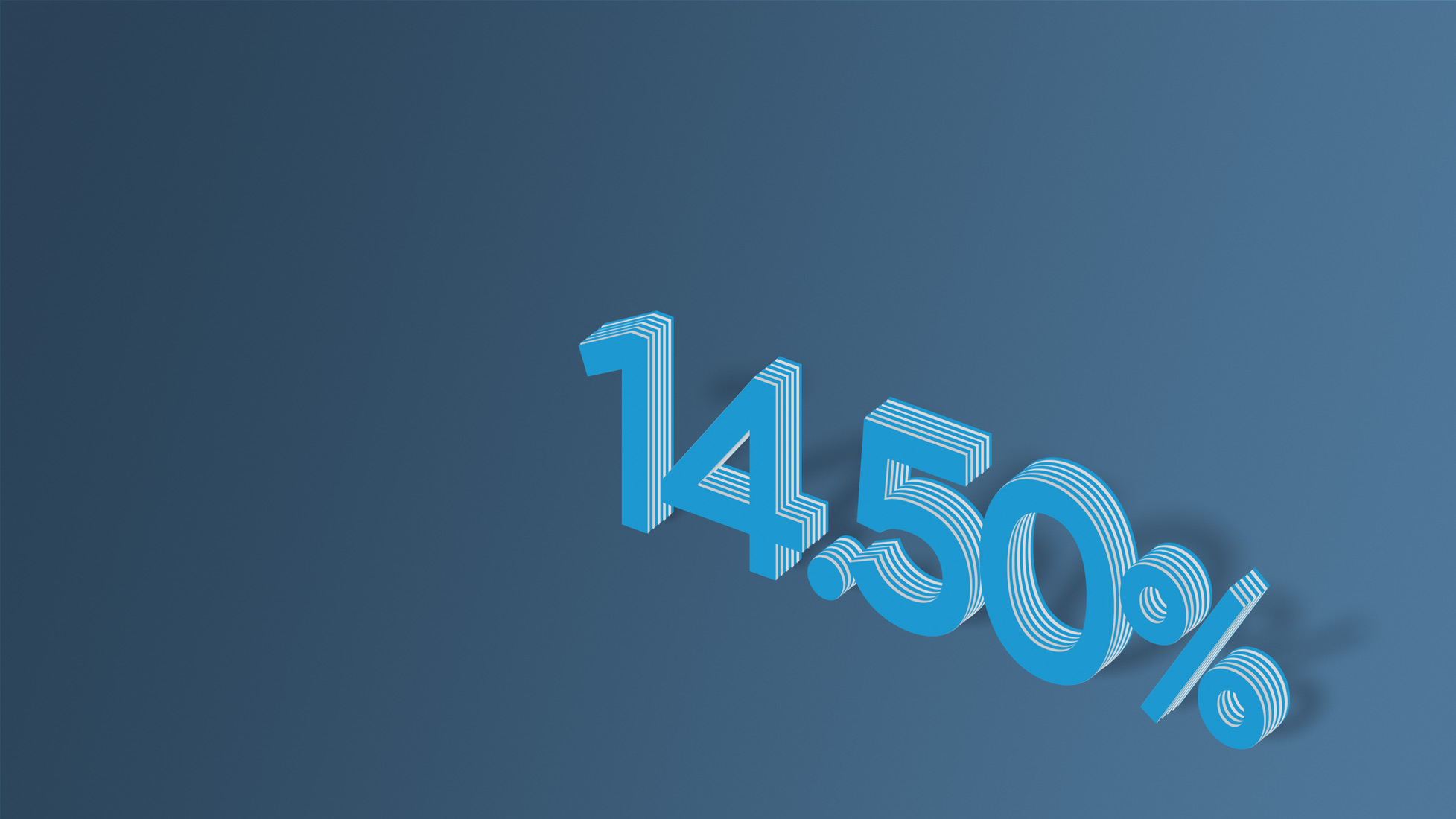
Having analysed the data, current trends, and the calculations provided, the meeting reached a broad consensus on the need to cut the key rate by 50 bp to 14.50% per annum. During the discussion, certain participants also argued for keeping the key rate unchanged at 15.00% per annum. That said, all discussants suggested accompanying the decision with a moderately dovish signal, indicating the need to assess the need for further key rate cuts at the upcoming meetings.
The main arguments of those who proposed keeping the key rate unchanged were as follows:
- The trend towards a slowdown in underlying price growth, which emerged in 2025 H1, has not yet become sustainable. Some measures of underlying inflation remain closer to 5% or even higher. Specifically, growth rates of prices for non-administered market services stay high, pointing to elevated underlying inflationary pressures. However, for inflation to decline to the Bank of Russia’s forecast levels in 2026, underlying price growth must be below 4% SAAR for the remainder of the year, rather than above this rate as was the case in January–March. To continue the key rate reduction cycle, the regulator needs to make sure that the trend towards the slowdown in underlying inflation has resumed.
- Annual growth rates of money supply stay elevated relative to the Bank of Russia’s forecast range for the end of 2026, and the year-to-date increase in money supply is running close to the upper bound of the 2016–2019 range. Taking into account the time lags, the above indicates the risks of inflation remaining elevated over the next quarters.
- According to high-frequency data, March–April saw signs of an upturn in business activity, following its temporary slowdown in January–February 2026, which was largely attributable to the impact of one-off factors. Similar dynamics were observed in consumption, which partially recovered in March after a weak start in early 2026. Domestic demand might be further supported by steadily high growth rates of households’ incomes and the earlier monetary policy easing. In these conditions, consumer demand may grow faster than expected, requiring a pause to assess future dynamics of demand, considering the lags of its response to the previous key rate cuts.
- Proinflationary risks associated with fiscal policy have risen. A historically high trajectory of budget spending in early 2026 increases the likelihood of the year-end fiscal impulse turning out to be stronger than assumed in the budget projections of autumn 2025. This may support domestic demand and decelerate the easing of inflationary pressures.
The main arguments of those who proposed cutting the key rate were as follows:
- In 2026 Q1, current price growth was below the Bank of Russia’s February estimates. The inflation spike in early 2026 was mostly transitory and attributable to the VAT increase and the indexation of administered tariffs. The impact of these factors has largely been exhausted. Most measures of underlying inflation did not grow over 2026 Q1 as compared to 2025 Q4, remaining within the range of 4–5% SAAR. Despite the influence of one-off proinflationary factors, households’ inflation expectations and businesses’ price expectations were down in February–April 2026, following their increase in late 2025–early 2026.
- Monetary conditions remain sufficiently restrictive even after the earlier key rate cuts, which is evidenced by credit activity dynamics. Despite the key rate reduction, lending growth rates have stayed moderate, with the increase in claims on the economy running below last year’s trajectory since the beginning of 2026.
- The positive output gap closed faster than assumed in the February forecast. Given the transmission lags, the effect of the closure has not fully translated into price dynamics yet. The earlier deceleration in domestic demand growth will continue exerting a disinflationary influence during 2026 and will ensure the return of underlying inflation to 4% in 2026 H2.
- Disinflation processes are also buoyed by a stronger ruble. The rise in export revenues creates prerequisites for the exchange rate to remain strong in the coming months, even despite the resumption of fiscal rule-based operations. The impact of increasing external inflation on domestic price movements will probably be limited owing to the ruble appreciation, the effect of the damper mechanisms, and the geographical structure of imports.
- Although proinflationary risks related to fiscal policy persist, there is still (albeit less) room for lowering the key rate. Even with a stronger fiscal impulse, the accumulated tightness of monetary conditions allows the regulator to continue the monetary policy easing cycle.
Most participants agreed that there was room to reduce the key rate. Keeping the key rate at the current level might create risks of an excessive economic cooldown and a more considerable deviation of inflation downwards from the target in the future. At the same time, the decision should factor in the increased uncertainty and proinflationary risks, primarily those stemming from the external environment and fiscal policy. Therefore, the key rate should be cut with caution. Furthermore, the Bank of Russia should also raise the forecast of the average key rate for 2026–2027.
As regards the signal, the participants considered keeping a moderately dovish wording used in March. Nevertheless, they emphasised that, when giving the signal about assessing the need for further key rate cuts, the Bank of Russia was not committing to cutting the key rate at any specific meeting. Further key rate decisions will depend on the incoming data, economic developments, and the degree of the materialisation of proinflationary risks.
Following the discussion, on 24 April 2026, the Bank of Russia Board of Directors decided to cut the key rate by 50 bp to 14.50% per annum. The Bank of Russia will assess the need for further key rate cuts at its upcoming meetings depending on the sustainability of disinflation, the dynamics of inflation expectations, and the analysis of the risks posed by external and domestic conditions.
The baseline scenario assumes that the key rate will average 14.0–14.5% per annum in 2026 and 8.0–10.0% per annum in 2027. According to the Bank of Russia’s forecast, given the monetary policy stance, annual inflation will decline to 4.5–5.5% in 2026. Underlying inflation will be close to 4% in 2026 H2. In 2027 and further on, annual inflation will stay at the target. GDP will increase by 0.5–1.5% in 2026. From 2027 onwards, the economy will be growing at a balanced rate of 1.5–2.5% per annum. More details on the Bank of Russia’s medium-term projections are available in the Commentary on the Bank of Russia’s Medium-term Forecast.
