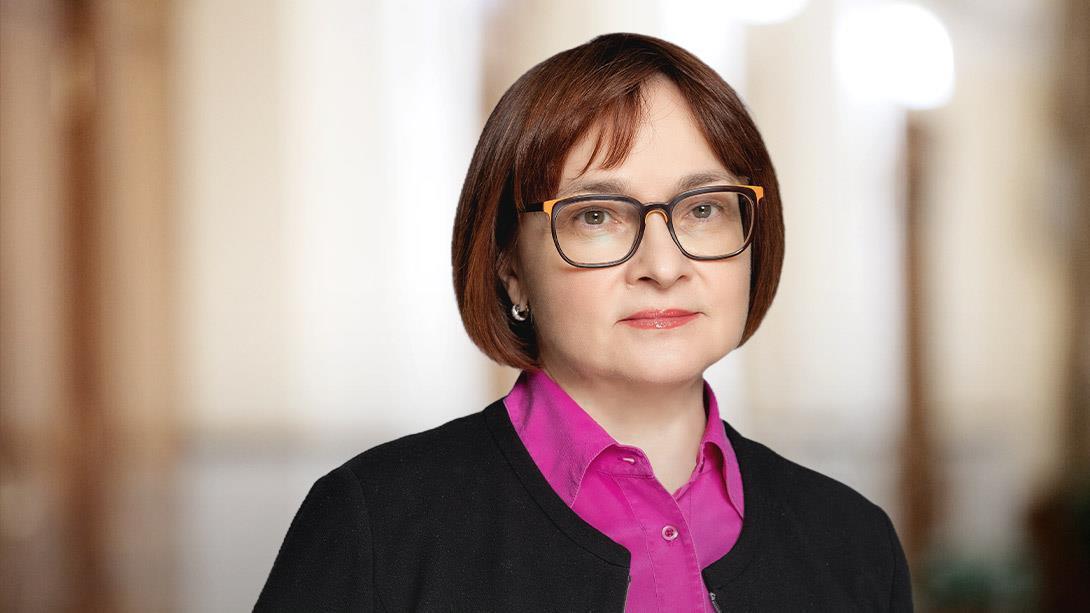
Elvira Nabiullina’s speech at a joint meeting of the State Duma’s dedicated committees: discussing Monetary Policy Guidelines for 2022–2024
Good afternoon, colleagues.
I appreciate your invitation to speak at this joint meeting of State Duma committees and present the draft Monetary Policy Guidelines. The draft was reworked following active discussions at the Duma. We are always very mindful of all recommendations coming in from deputies.
I would like to begin today with our view of the current situation in the context of the monetary policy decisions we have taken this year. I would then like to discuss the document itself, considering that the focus of our decisions and of our analysis [of current developments] is directly linked to the draft Monetary Policy Guidelines.
This year has been a year of recovery after an unprecedented crisis. Luckily, the domestic economic recovery has been quite fast, and faster than many expected. Not only has the economy returned to pre-pandemic levels, but also to the growth trajectory it would have been on but for the pandemic. One exception though is the oil and gas sector, where arrangements for output constraint are in place. Unemployment has almost returned to its 2019 level, a historical low, but the numbers of open vacancies are also at an all-time high. Our assessments, communications with regions and regional business analysis all show the emergence of labour shortages across many sectors.
The global economic recovery has also been faster than expected. This is not to say however that we have successfully overcome all the consequences of the pandemic. The recovery is held back by a big mismatch between demand, which has climbed above pre-crisis levels in almost all sectors, and supply, which is lagging behind demand. This imbalance is also observed in other economies beyond Russia, and comes as one of key reasons for the spike in inflation, both globally and domestically.
Central banks are now confronted with the need to address this inflation spike. Some central banks hold the view that the problems are transient and need no monetary policy response; they say that a wait-and-see stance is warranted. Others, including the Bank of Russia, believe that the view of the emerging inflationary pressure as temporary is contestable. I will explain why.
Recent problems related to supply and production chains have proved more drastic than expected. They have persisted despite lifting almost all pandemic-linked restrictions on the movement of goods.
Moreover, the structure of demand has changed. People are now increasingly consuming more goods than services. Hence the rise in demand for shipments of goods and packaging. What is more, in the context of both the pandemic and the post-pandemic period (drastic structural changes are ongoing), we can see the emergence and rise of demand for extensive and almost ubiquitous use of digital channels. That has pushed up demand for telecommunications equipment. Those problems might seem to be sporadic but for their progression and ripple effects. There is a shortage of microchips, packaging materials, plastics, and so on. Ultimately, the lack of microchips is resulting in problems for car manufacturers. Some of them expect problems to persist beyond the end of this year and last into 2022 or even 2023. So that would be by no means a short-term market failure. Those problems create sustained inflationary pressure.
Undoubtedly, inflation dynamics are also influenced by fully temporary drivers. An example could be the bad weather that was behind a reduced storage life of both last and this year’s harvest. Our policy assumes that those phenomena will peter out. Still, they cannot be ignored because of the long-term effects they bring. Temporary problems may lead to long-term fallout. Why does that happen? When shoppers notice rising prices, they do not think in terms of temporary and sustainable factors, as we do — they just think that prices are set to keep rising. Inflation expectations are even stronger fuelled by rising prices for so-called trigger products (the basics that primarily include food).
Moreover, we have been witnessing a strong rise in inflation expectations over the past year and a half. Inflation expectations have returned to their highest levels since 2016 — and you remember that the high inflation of 2015 was falling to target from its extremely high 2015 level. All that is a factor to consider in making monetary policy decisions. And that makes Russia different from countries with steadily low inflation, the inflation that they are fighting. Those countries have enjoyed about 30 years of low expectations, and inflation expectations are anchored there. People there understand that the central bank will prevent a rise in inflation. They see no point in rushing to buy up all things in advance, confident that inflation is set to return to the central bank target. Unlike in Russia, a short-term fluctuation in the markets comes without a spike in inflation expectations. That is easily explained: inflation has been about 4% for only about 4 years. Previously, it had been high for 25 years, and before that, in the 1990s, we had hyperinflation. People’s attitudes are understandable.
However, growing inflation expectations are not an abstract concept. Central banks will always mention it. This is not an abstract category, as people’s behaviour is changed by what they expect from inflation: they increasingly spend more if they can, rather than saving. Their strategy is ‘buy now, even if on credit’. Accordingly, consumer loans are now growing as people are willing to spend before prices rise even further. This change in the model may create high risks of an inflationary spiral. In that case, supply still fails to keep pace with demand because of logistics restrictions and other factors, driving money demand higher and pushing up prices without translating into increased consumption. In other words, we are in a situation where no more cars are supplied — just their prices are up. To address ‘excessive demand’, we do not intend to restrain the volume of consumption, but will try to prevent consumption translating into prices.
History suggests that the only way to anchor inflation expectations is to bring inflation back to target. People are supposed to live their own fairly long experience with low price growth without fears that their well-being may crumble tomorrow.
Well-being is indeed crumbled by high inflation. When the case is made for inflation growth and a sustainably low key rate to enable lending across the board, we cannot agree. Inflation is a real problem that makes people poorer. Rising inflation expectations are indeed a reason for concern. The way the rise in inflation expectations has already affected people’s financial behaviour shows how people are alarmed by inflation.
Ultimately, we do not work for the sake of banks’ loan portfolios. Although credit is essential, high debt is not an enabler of successful economic development. More often than not, high debt is a problem for economic development. Our ultimate aim is human well-being.
This is why the central bank must intervene to forestall inflation growth. And this is exactly why we raised the key rate at our recent Board meeting to 7.5%, and will probably consider the need for a further increase at subsequent meetings. It is our duty to bring inflation back to target and keep people’s trust.
I would also like to remind you that monetary policy works with a temporary lag. It may take between three to six quarters for our recent decisions to make a difference, that is, for the upgrade in the key rate to influence people’s behaviour by changing market rates and influence inflation. This lag is known as a transmission mechanism lag. The rate increases we have enacted since March are starting to influence the economy, and we are now seeing the emergence of some changes that we think are poised to intensify.
Throughout last year and especially this year, deposit rates have remained low, helped by our accommodative monetary policy — you remember that we reduced the rate to 4.25% in the course of the pandemic, aiming to support the economy and consumers. Low inflation is not that much of a problem. However, inflation has started to rise, and inflation expectations have been rising even faster, while interest rates have remained low. Incidentally, banks were in no hurry to raise interest rates after the first key rate increases on the expectations that inflation was temporary and that our policy tightening was temporary, too. Banks thought they could wait out the rise and decided against raising rates, that is, against offering higher interest including on deposits. Therefore, we had to take decisive action to make banks change their interest rate policies. As a result, deposit rates finally started to rise, and banks offered 5.9% p.a. as one-year-plus deposit rates in September, compared to 4.2% at the beginning of this year. Interest rates continued to grow in October (according to the available flash estimates based on analysis of banks offerings) and averaged 6.7%. We understand that it is a low deposit rate compared to inflation. However, we need to look into this year’s inflation, not last year’s, so that we can guarantee that deposit money does not depreciate within the year. If we manage to return inflation to target as our policy suggests, deposit rates will turn positive, making deposits profitable so they overtake inflation. We can see that people are responding to this, with deposits rising over the first 10 months of the year and 1.2% up — after their marked growth in the autumn — compared to last year’s outflow at 0.8%. People transferred deposit money to current accounts or withdrew it for financial market transactions. At the time, we discussed the measures necessary to protect people.
We are seeing gradual improvements in deposits. Unlike deposits, there are no rapid changes in unsecured consumer lending. It has been growing fast at 16% over the first nine months of the year. This is not good. Continued debt burden spells trouble. Loan rates are ultimately tracking the rising key rate, even though these movements are slow. Despite increased interest rates, loans are attractive — thanks to high inflation expectations.
We therefore have asked you, the legislative body, to introduce macroprudential limits on certain types of loans, especially those issued to debt-laden borrowers. I hope that this law passes in the near future. It will help limit an increase in debt loads of debt-laden borrowers and prevent growth in loan portfolios in overheated segments. Consumer lending is currently an overheated sector. However, lending in other segments will expand unhindered.
The key rate primarily targets short-term loan rates, that is the cost of short-term money borrowed for up to a year. Meanwhile, long-term loan rates are to a larger extent shaped by inflation and expectations for its future path. That is, inflation expectations are priced in, among other things, when a bank issues a loan. They translate to long-term rates as banks want to make sure inflation does not destroy their interest income. Therefore, if we had kept the key rate low and banks had assumed that the Central Bank favoured inflation, or if banks had no confidence in us controlling inflation and working to return it to target, they would have added more percentage points to their mortgage rates to offset losses from inflation. Mortgage rates for people would have gone up then. That was the case back in
Corporate lending, including to small and medium-sized enterprises, is also gaining momentum. Over the first nine months, the corporate portfolio of loans to major companies was up 7%, and that of loans to small and medium-sized businesses went up 26%. Whereas last year that growth in lending to small and medium-sized businesses was explained by the willingness of small and medium-sized businesses to take loans to pay salaries and rent, that is to offset drops in revenues, loans are now being taken to fund production expansion. In an unsettling post-pandemic environment, it is certainly essential that businesses have confidence in the future and that we maintain the stability of inflation and long-term interest rates. In response to the next wave of the pandemic, we have again enabled some special arrangements for small and medium-sized businesses that are affected. We want to ensure that banks continue lending to small and medium-sized businesses that are subject to restrictions.
Protecting household incomes is our top priority, and low inflation is undoubtedly the key enabler there. As a mega-regulator we have, in addition to monetary policy — which we are focused on today — other instruments. I would like to remind you of them, considering their importance in the context of protecting people in the financial market.
We are developing various financial services and the Faster Payments System. The aim is to make payments more convenient for consumers and ensure that merchant acquiring services, which are included in the cost of goods, are fairly priced. We are currently combating hidden commissions and services imposed by financial institutions. Deputies are closely watching this problem, and there is much talk of it — the problem of buying one product at a certain price but instead getting another one.
Beginning in the new year, we are launching a transparent cooling-off period. Within this 14 day-period, consumers have the right to cancel any forced service. I mean a service that is tied with a loan, such as insurance and legal support, which are aggressively marketed when a loan is issued. The right to opt out should be applied as widely as possible to counter the appetite for unfair sales, which is unfortunately often the case in today’s business practices. Furthermore, our position is that a creditor providing loans and selling additional services should notify the borrower of the right to opt out of them, because the borrower may struggle to get things straight, having to sort out many hidden payments in the loan agreement that comes with a seemingly very attractive interest rate.
We intend to drastically raise fines for imposing tied products and misselling.
We also want to change the method of calculating the total loan cost so that it includes all additional payments, fees, insurance and other services sold together with the loan. In this way, the borrower will really understand the real cost of the loan and not be blinded by a promotional and often dishonest rate. Many ads out there offer unrealistic rates, in fact. A bank operating with this rate would make loss, so such rates are never offered in reality, but simply used to attract borrowers. It is essential that the creditor informs the borrower how the total cost of credit changes if the loan agreement is amended. Current practices show that the total loan cost is low under the agreement, but there comes an additional concurrent agreement that makes the cost higher. We propose to address the problem through amendments to legislation. I am raising this issue because I believe it has to be fixed quickly. Understandably, financial institutions may not be happy about this regulation, but we need it. Cleansing the financial system of unstable or criminal banks was the main stage of our efforts. It involved licence revocations and financial resolutions. Now that that work is over, we have an opportunity to solve this problem, shifting the focus away from issues of financial institution stability to protecting financial consumers — individuals and businesses.
Now on to our forecast. Mr Aksakov has commented on it. The forecast contains a baseline scenario and several alternative scenarios.
The baseline scenario, which we view as most probable, is based on several assumptions. One, the epidemiological situation will gradually improve. Two, we expect the gradual recovery of the global economy to continue. Three, we assume that production chain bottlenecks will ease and inflationary pressure will stop increasing to gradually fade out. Four, we understand that major economies, primarily the US, is set to phase out their incentive measures and exit from overly accommodative monetary policies, and that the world will escape an inflationary spiral. This is what our baseline forecast is.
Under our baseline forecast, we estimate inflation to hit
Our policy is capable of reducing inflation to the target level, which is why we raised the key rate and will hold it above the neutral level for some time to deliver a sustainable slowdown of inflation. As you know, since this spring, we have been publishing our key rate forecast. We had not done that before, so this is an innovation of this year. We are now publishing both the forecast rate and the average annual rate. It is
However, our policy does not hamper economic growth. On the contrary, low inflation is what we believe the economy needs. High inflation pushes relative prices upwards, making it hard for businesses to plan their revenues and profit margins without understanding how much costs and prices for their products are expected to rise. High inflation brings about broad ranges of relative price movements, whereas in a low inflation environment, as we know from our short four-year experience, all prices rise in a consistently phased manner. Businesses struggle to plan investments [when inflation in high]. By raising the rate, and thereby aiming to reduce inflation, we are helping to set the economy back on a balanced and sustainable growth trajectory.
GDP is expected to add
We all want high growth rates, so let us compare this year and next by making an analogy with a sprint athlete. It is impossible to run quickly for a long time. That is why it is impossible to spur the economy and force it to grow above potential. I will now explain what is meant by ‘potential’. The economy is unable operate in high-performance mode for a long time. That comes with high inflation, and that mode is like a high pulse of a runner who is certain to slow down, and may develop shortness of breath and a heart attack, God forbid. That is why it is important to roll back anti-crisis measures in time. Overheating should be avoided. Its symptom is high inflation. It signals that supply is failing to keep pace with demand. We have quickly moved beyond the pandemic. We now need to move at a normal pace, and therefore fiscal and monetary policy normalisation is very important. Sustainable growth rates — higher than the present
Now on to alternative scenarios. We present them once a year. While they previously differed just in oil prices, now — thanks to the fiscal rule and a floating exchange rate — oil prices are making a lower impact on the economy, so we view alternative scenarios as the influence of external factors that could significantly change the situation.
What are these factors and scenarios? The first one is intensification of the pandemic. That is, what would happen if the pandemic intensified and lockdowns were enacted across the world — how the economy would be affected. The second one is global inflation. In the context of inflation rising worldwide, if the world failed to tame it, how that would affect us. And the third one is a global financial crisis. That is, what would happen if central banks were to produce a strong response to global inflation. The world has accumulated such a large amount of debt that their response may affect financial markets. I will tell you straight away that we do not view the three alternative scenarios as highly likely. We believe that their probability is lower than that of the baseline scenario, and not because we do not like them, but because we view baseline scenario assumptions as most plausible. Still, it is our duty to show how the Bank of Russia would act if the situation developed under those scenarios. The Monetary Policy Guidelines outline our policy in all the three cases. It is also important to explain here that we are not only showing our course of action. These alternative scenarios make it possible to see how sustainable our current monetary policy decisions would be if life were to change course and if other external conditions emerged, to see if the decisions we are enacting today would work in other circumstances. That is also important for us. And I must say that our policy — making inflation return to target in 2023 or 2024 — does stand the test of change. It is reliable enough, and we will be able to adjust to new external factors without any leaps and shocks for the economy.
Early on, Mr Aksakov suggested that we additionally develop a higher growth scenario; and we are ready to do so. However, high growth rates are, in our opinion, not those that are fuelled by inflation and then declined. Inflation may be tolerated for the sake of growth incentives for one to two years, but then growth declines and its rates are lower than if there were no inflation shocks. A steady increase in growth rates can certainly be delivered through the Government’s structural programme, through easing up bottlenecks, enhancing infrastructure, and so on. Monetary policy measures cannot deliver that. However, we look into the implications of that option as we take into account the Government’s structural programme in the baseline scenario. It should be understood that any structural measures do not immediately take effect and may take
In conclusion, just a few words on the connection between inflation and economic growth, inflation and people’s well-being, which is the main reason why we need low inflation.
Let me reiterate: we are confident that there would be no long-term investment or no long-term loans without low inflation. People would lose their savings and incomes as inflation eats them up. All that would combine to undermine public trust in economic policy. Without a goal for the future, sustainable economic growth is impossible. Therefore, the dilemma ‘inflation or economic growth’ is misleading. Low inflation is needed precisely to enable economic growth. Otherwise, there would be dollarisation instead of saving in rubles (which banks transform into loans), and withdrawal of profits instead of investment. And that usually ends with stagflation. It took many years for countries affected to overcome stagflation. Our policy is specifically aimed at preventing that scenario, sustaining inflation at a target that is comfortable for individuals and companies, a policy that enables business expansion and economic growth close to potential, at a level where it can be sustainable and balanced.
Thank you for your time.
I will be happy to answer your questions.