
Discussants: members of the Bank of Russia Board of Directors, senior executives of the Monetary Policy Department, the Research and Forecasting Department, and other Bank of Russia Departments and Main Branches.
The Monetary Policy Department together with the Research and Forecasting Department presented the results of the analysis of the current economic developments nationwide and worldwide, as well as the suggestions regarding the baseline macroeconomic forecast for 2026– 2028 and its variations. The Bank of Russia Main Branches provided information on the situation in the Russian regions, including based on business surveys. Furthermore, the participants in the discussion considered the information from the Financial Stability Department and the International Settlements Department.
The discussants’ opinions are based on the data available as of 13 February 2026.
This Summary covers the key points of the discussion.
 Economic situation and inflation
In 2025 Q4, current price growth decelerated to 3.9% on average (seasonally adjusted annualised rate, SAAR) from 6.5% SAAR in 2025 Q3. Core inflation over the same period sped up to 4.7% SAAR on average from 4.1% SAAR in 2025 Q3. According to the estimate based on weekly data, current inflationary pressures increased considerably in early 2026. Companies’ price expectations declined in February 2026 after their rise over the previous four months, returning to the 2025 average. Households’ inflation expectations remained unchanged in January 2026. Analysts adjusted their inflation forecasts for 2026–2027 slightly upwards. GDP growth decelerated from 4.9% in 2024 to 1.0% in 2025, while Rosstat raised its assessment of GDP growth in 2024 from 4.3%. According to high-frequency data, in 2025 Q4, economic growth sped up quarter on quarter (seasonally adjusted, SA). In January–February 2026, the Bank of Russia’s Business Climate Index was on average below the level of 2025 Q4. Unemployment stayed at its record low of 2.1% SA in December 2025. The growth rates of nominal and real wages declined (YoY) in November 2025 after their rise in September–October 2025.
Inflationary pressures strengthened notably in early 2026, which was provoked by one-off factors. Price growth was fuelled by the increase in VAT and the indexations of excise duties and administered tariffs, as well as changes in the dynamics of prices for certain volatile components (fruit and vegetables). Lacking complete monthly data on inflation, the discussants assessed current price movements relying on weekly data. They concurred that the acceleration of price growth in early 2026 was mostly attributable to a redistribution of price effects between late 2025 and early 2026: part of price growth shifted from December to January.
- Firstly, judging by price statistics, most companies decided not to pass on higher VAT to prices in December 2025, but did this in early 2026. It was argued that, at the end of 2025, enterprises were seeking to sell out the accumulated stocks, preferring not to pass through the increased tax burden to prices in order to offer more attractive price conditions. Consequently, the seasonal adjustment of prices occurred in January for the most part. This was generally consistent with the dynamics following the previous rise in VAT from 1 January 2019. However, in the current environment, persistently overheated demand allowed a greater pass-through of higher VAT-driven costs to prices. Moreover, the scale of the recent pass-through turned out to be more pronounced since the tax increase affected a larger number of products and services, namely banking services. Additionally, the range of producers obliged to pay VAT expanded due to the reduction in the threshold revenue for applying the simplified taxation system.
- Secondly, following the deceleration in December 2025, the growth of fruit and vegetable prices sped up considerably in January 2026. At the end of the year, the increase in prices for greenhouse products was moderated by mild weather, whereas in January 2026, prices for them surged due to colder weather and higher producer costs.
As pointed out by the discussants, the above factors led to lower inflation at the end of 2025 than expected by the Bank of Russia and will result in higher inflation in 2026 compared to the October projections. However, analysing the price dynamics over the past few months, namely from November 2025 through January 2026, the accumulated headline price growth is consistent with the October forecast.
The participants in the discussion especially focused on the assessment of underlying inflationary pressures at the beginning of the year. According to the majority of discussants, these pressures barely changed compared to 2025 Q4 and the January dynamics were largely reflecting a one-time adjustment of prices rather than a new trend of rising inflation. They stressed that the statistical measures of underlying inflation would expectedly go up in January, since the method used for their calculation cannot exclude the effect of the VAT increase. Nevertheless, this alone does not evidence an upward reversal of underlying inflation. The discussants highlighted that price growth had peaked over the first weeks of January, waning afterwards (according to weekly data). Furthermore, households’ inflation expectations remained unchanged in January, while companies’ price expectations declined in February after their growth during the previous four months. Together, this suggests that one-off factors have likely translated into inflation for the most part already, whereas their second-round effects will be limited. According to most discussants, when adjusted for higher VAT and the impact of volatile components, underlying inflationary pressures may be assessed within the range of 4–5%, which is close to the levels recorded at the end of 2025. Considering that monetary conditions remain restrictive, it is still possible to expect underlying inflation to return to 4% in 2026 H2.
Other participants stressed that underlying measures of inflation could not be correctly adjusted for the impact of increased VAT and it would therefore be premature to draw an unambiguous conclusion regarding underlying inflation. Weekly data only partially reflect changes in prices in the services sector where the pass-through of higher VAT and administered tariffs could be more pronounced, including on account of companies that had to switch from the simplified taxation system to the general one. Moreover, households’ inflation expectations remained heightened, while the significant indexation of administered prices in 2026 might hinder their decrease and slow down sustained disinflation. To confidently affirm the absence of second-round effects, measures of underlying inflation should decline further and not just stay unchanged.
The participants agreed that underlying inflationary pressures could be assessed more accurately only in 2026 Q2.
In the course of the deliberations, the participants discussed the revision of GDP growth for 2024 and its first assessment for 2025. It was argued that a higher growth rate in 2024 and the 2025 result at the upper bound of the forecast might suggest a more considerable positive output gap in 2025 than estimated before. Nevertheless, most discussants noted that faster growth in 2025 amid decelerating inflation could indicate a greater increase in the economy’s potential output, including as a result of investment expanding at a record pace over the past few years, which enabled the launch of new projects and boosted the economy’s production capacities.
A separate topic of the deliberations was the intra-annual dynamics of output. It was noted that Rosstat had not updated its quarter-by-quarter breakdown of GDP for 2025 yet (it will be revised in April as usual). A purely technical comparison of the earlier released data for the first three quarters against the annual assessment might give an impression of a substantial upturn in economic activity at the end of the year. However, the experience of previous years and the assessments based on high-frequency indicators suggest that the intra-annual dynamics were smoother. Part of the goods recognised in the statistics only at the end of 2025 could be manufactured over the course of the year, including under government contracts. The demand for these products was forming and influencing economic activity throughout the year via payroll payments, purchases of intermediate goods, and companies’ investment spending. In this context, economic activity is a continuous process, whereas its statistical indicators may be shifted in time.
At the end of 2025, consumer demand picked up, which was predominantly due to the anticipated increases in the recycling fee and VAT. Some households were seeking to purchase expensive goods earlier, at lower prices. The meeting noted that the factors that had additionally propped up demand in 2025 Q4 had been transitory. Therefore, the expansion of consumption might be expected to be more moderate in early 2026 or even slow down more significantly since demand had already been realised for the most part in late 2025. According to the monitoring of businesses, in January–February 2026, more companies reported subdued demand as a factor influencing their operations, as compared with previous months.
The participants in the meeting discussed the hypothesis regarding the accelerated sale of stocks at the end of 2025. Assessments show that certain non-food categories, including household appliances and electronics, recorded a significant upturn in sales (SA) in December 2025, whereas retailers’ stocks decreased only slightly (SA) in November–December 2025. It was argued that such a change in stocks did not refute the hypothesis about companies’ willingness to sell them out. Orders for non-food goods are placed several months before they are available in retail. The goods sold in November–December 2025 were ordered in summer for the most part, as demand was expected to rise during the period of pre-New Year sales. If actual demand turned out to be lower than assumed when orders were placed, the reduction in stocks could be limited even despite active selling tactics and flexible pricing policies.
Investment activity is becoming more moderate. Surveyed companies are revising their investment plans for 2026 downwards. Some respondents reported being very cautious in their investment plans in early 2025 as well, while adjusting these plans upwards over the course of the year following economic developments. It was noted that, even despite more moderate dynamics, the amount of investment will stay at its record high.
The labour market is easing gradually. Unemployment is still at its all-time lows and may remain low for a long time amid structural staff shortages and the ongoing redistribution of labour resources across companies. Nonetheless, surveys show that staff shortages continue to decrease and are at the minimum levels recorded since mid-2023. The number of job adverts is declining. Nominal wages are still increasing quickly, outpacing labour productivity growth, but their dynamics are nevertheless lower than in 2023–2024. Additionally, surveyed companies report more moderate wage indexation plans for 2026 than in the previous few years, which indicates a gradual easing of the pressure put by the labour market on businesses’ costs.
In 2025, the actual budget parameters were consistent with the budget projections updated in autumn 2025. The structural primary deficit was slightly lower than in 2024. The discussants noted that the disinflationary effects of fiscal policy had turned out to be much less pronounced than assumed at the beginning of 2025.
In 2026, fiscal policy is expected to produce disinflationary effects as well. However, there are risks of the fiscal system facing a decline in revenues as compared with the projections. If the macroeconomic situation turns out to be weaker than the forecast underlying the budget, actual budget revenues might be below the target values. If expenditures stay unchanged, this will mean that the structural primary deficit will persist. Consequently, the budget will have a less restrictive impact on aggregate demand and produce weaker disinflationary effects than expected.
The discussants agreed that the positive output gap had been contracting over the course of 2025, which is confirmed by the dynamics of underlying inflation in the first place. It was noted that underlying measures of inflation had considerably lowered in 2025 Q2 vs 2025 Q1, with a stronger ruble being a major contributor. In 2025 H2, the disinflationary effect of the ruble exchange rate was weakening gradually. Nevertheless, underlying inflationary pressures did not increase and even eased somewhat, which might point to a growing contribution of cooling demand to price changes. However, some discussants argued that the positive output gap could be slightly bigger in 2025 than estimated before, taking into account higher growth rates of consumption at the end of 2025, among other factors. Despite that, most participants in the discussion did not change their estimates of the path of the output gap, still expecting it to close in 2026 H1. Certain discussants also noted that high and unanchored inflation expectations usually prevent the economy from returning to its steady state after a period of overheating without a temporary deviation towards a negative output gap. Therefore, it is crucial to make well-balanced decisions, ensuring the return of inflation to the target, on the one hand, while avoiding an undue tightening of financial conditions which might cool economic activity excessively, on the other hand.
 Monetary conditions
Money market rates and yields on federal government bonds (OFZ) mostly increased over the period following the December meeting. Contrastingly, short- and medium-term money market indicators were still declining as of the end of January 2026. Deposit rates edged up in December 2025, but then dropped in January 2026, according to high-frequency data. Loan rates went down in December. The retail loan portfolio expanded in December (MoM) whereas the corporate loan portfolio shrank (MoM). The annual growth rate of broad money, adjusted for foreign currency revaluation, fell in December 2025–January 2026.
The participants in the discussion concluded that monetary conditions had slightly eased since the December meeting, while remaining restrictive.
It was noted that price indicators had been changing diversely over the period after the previous meeting.
- Money market rates and OFZ yields were predominantly growing, possibly driven by upwardly revised inflation expectations for 2026, as well as higher risk premiums amid a potential increase in the government’s need for borrowings.
- Deposit rates dropped after the December meeting, following the key rate dynamics. The discussants noted that, after a prolonged period of an abnormally small spread between OFZ yields and deposit rates and even its transition to negative territory (December 2024–July 2025), the spread had been positive widening since August 2025, which might suggest more moderate demand for credit and lower competition for deposits among banks. According to some participants, the normalisation of the spread was associated with the fact that banks had largely adapted to the restoration of prudential requirements and the tightening of macroprudential policy.
- Loan rates went down in December 2025, reflecting the earlier easing of monetary policy.
- Corporate bond yields rose in December 2025, which was predominantly attributed to large offerings by a number of issuers, but then resumed a downward trend in January 2026. The participants in the meeting noted that bond yields declining more notably throughout 2025, as compared with bank loan rates, contributed to the redistribution of some companies’ demand for borrowings towards bonds. Loan rates were going down more slowly than bond yields, including because banks tightened their requirements for borrowers.
The discussants concurred that, although nominal interest rates had been changing diversely since the previous meeting, price monetary conditions had eased in real terms taking into account higher inflation expectations, while remaining restrictive. They are tighter in the unsubsidised lending segment than suggested by the aggregated indicators of interest rates, which is attributable to a considerable share of subsidised programmes where funds are raised at lower interest rates.
Non-price lending conditions were restrictive as well. Moreover, they tightened somewhat for large businesses in 2025 Q4 in terms of the size of issued loans and the requirements for borrowers.
The discussants noted that credit activity had been generally consistent with the Bank of Russia’s forecast.
- The growth of corporate lending slowed down as of the end of 2025, as compared with the previous year, while approaching the upper bound of the forecast range (YoY). After its faster expansion in the autumn months, driven by monetary policy easing, the corporate loan portfolio contracted in December 2025 (MoM). Adjusted for one-off effects, its dynamics remained positive, although weaker than in autumn. In January 2026, banks’ claims on companies decreased (MoM), according to preliminary data. In December 2025–January 2026, corporate lending was affected by the seasonal dynamics of budget spending. As usual, budget expenditures were up in December, although less notably than over previous years. Companies were receiving payments under fulfilled government contracts and repaying their loans. Additionally, they received advance payments under new contracts in January 2026, which decreased their demand for borrowings.
- As for retail lending, its growth rate as of the end of 2025 was within the range forecast by the Bank of Russia (YoY). In December 2025–January 2026, retail lending picked up, mostly on account of mortgages. The accelerated expansion of mortgage lending was attributable to the expected changes in the Family Mortgage programme terms from 1 February 2026. The participants in the discussion noted that such dynamics had already been observed after the earlier amendments to the subsidised programmes: the increases in disbursements had been temporary, with demand shifting to earlier periods, and had typically adjusted downwards in the next few months. Such spikes never entailed a persistent upward trend of the growth rate in retail lending.
The discussants concurred that further lending dynamics would depend on monetary conditions and the response of demand to them, as well as the supply of bank loans. Under these conditions, the corporate loan portfolio will be expanding more modestly than over previous years.
Households’ saving activity stayed high. Their demand for various saving instruments remained stable. At the beginning of the year, the inflow of funds into deposits slowed down. Short-term deposits still made up the largest share of ruble deposits. They were the most attractive for depositors because banks set lower interest rates for longer terms, anticipating further disinflation and monetary policy easing. Concurrently, banks reported an inflow of funds into current accounts and growth in investment in alternative saving instruments, including bonds and real estate. Thus, the structure of savings was changing, while the saving ratio remained close to its record highs.
The expansion of money supply decelerated in 2025, compared to 2023–2024, although slightly exceeding the October forecast. Its growth rate in early 2026 was lower than in early 2023–2025 but comparable with the range of 2016–2019.
The meeting discussed companies’ and the banking sector’s financial resilience. The number of restructured loans increased in late 2025, but then declined in early 2026. Non-financial companies’ financial performance over the first 11 months of 2025 was lower year on year. Nevertheless, most companies remained financially resilient, while deteriorations in their position were occasional and only affected individual segments. As assessed by the largest banks, the structure of the corporate loan portfolio in terms of risk levels barely changed in 2025 H2. Although banks did reassess risks in certain industries, the quality of the portfolio remained stable overall. Cost of risk indicators in corporate lending remained moderate.
 External environment
The growth rate of the world economy in 2025 H2 exceeded the Bank of Russia’s and market participants’ expectations, according to high-frequency data. Inflationary pressures in key economies were changing diversely. Prices for most Russian exports have risen since the beginning of 2026, while staying below last year’s averages. Crude oil prices have adjusted slightly upwards after plummeting in 2025 Q4. The ruble has somewhat strengthened against the main currencies since the beginning of the year.
The situation in the world economy is better than expected, which is explained by a number of factors, according to the discussants. Firstly, companies worldwide are adapting to the changes in the terms of trade, rearranging their supply chains. Secondly, the effective US import tariff rate is actually lower than initially estimated, including because of exemptions for certain product categories and trade partners. The world economy is also supported by investment in artificial intelligence development, as well as fiscal stimuli in a number of countries. Nevertheless, the level of uncertainty is still high, and the risks of a worsening of the situation in the world economy persist.
The discussants noted that the effects of higher tariffs had started to translate into inflation dynamics in the largest economies, although affecting only individual components so far. The US Federal Reserve System paused monetary policy easing in January 2026, explaining its decision by the need to assess inflation risks. The European Central Bank kept its policy rates unchanged. Most other central banks also decided to take a pause in changing their policy rates.
Global prices for crude oil edged up after the December meeting, which was associated with rising geopolitical tensions and additional restrictions on supply introduced by certain exporting countries. However, looking at the longer period of 2025, crude oil prices dropped notably. As the growth of demand in the global oil market was moderate, this created an oversupply, which was exerting pressure on prices. Additionally, Russian crude prices were affected by the tightening of the sanctions in 2025 Q4. The discussants concurred that reducing the oil price forecast would be reasonable, taking into account the persisting surplus in the global market.
Due to lower oil prices, in 2025 Q4, exports declined below the level of 2024 Q4. The decrease in oil and gas revenues was partly offset by higher revenues from the export of other goods as prices for them were up.
The ruble has slightly appreciated since the December meeting. According to the participants, the ruble exchange rate was still affected by cyclical and structural factors. The cyclical factors listed by the discussants included monetary policy tightness, which restrained the growth of demand for imports and made ruble assets a more attractive option for savings. The main structural factors highlighted by the discussants were limited opportunities for residents to invest in foreign assets, the development of import-substituting domestic production, and tighter restrictions on imports. These factors were forming steadily lower demand for foreign currency. Additionally, against the backdrop of falling oil prices, the ruble exchange rate was also affected by higher prices for other Russian exports and fiscal rule-based foreign currency sales.
 Inflation risks
The participants in the discussion agreed that proinflationary risks were still outweighing disinflationary ones over the medium-term horizon.
The main proinflationary risks include:
- A slower reduction in the positive output gap (continued overheating of demand), which can be the result of both persistently elevated domestic demand and more severe supply-side constraints. Demand might stay high due to increases in credit and fiscal stimuli. Although labour market-related risks have weakened somewhat, the existing staff shortages may still accelerate the rise in real wages and thus widen the gap between the growth rate of real wages and that of labour productivity. Regardless of the reasons, the persistence or a slower decrease in significant demand overheating imply stronger underlying inflationary pressures.
- A long period of high inflation expectations or a resumption of their growth. Even though households’ inflation expectations did not show a notable additional response to the increases in VAT and administered tariffs at the beginning of 2026, it is impossible to completely exclude the possibility of second-round effects stemming from these one-off factors. If these effects arise, underlying inflation might accelerate.
- Worsening terms of external trade due to deteriorating conditions in global commodity markets and geopolitical developments. A global economic slowdown, caused by escalating trade tensions and expanding protectionist measures, may lead to lower demand and prices in commodity markets. An accelerated increase in oil production by both OPEC+ and non-OPEC+ countries might put additional pressure on oil prices. As a result, the value of Russian exports may decline more considerably than expected, affecting the ruble and inflation through the foreign exchange channel.
- A larger budget deficit and the emergence of second-round effects associated with the structure of budget revenues and expenditures. A deviation of actual budget revenues from the forecast parameters in 2026 might entail a structural primary budget deficit, which will make the disinflationary effects of fiscal policy weaker than expected. Additionally, an easing of fiscal policy or an expansion of subsidised lending programmes may lead to persistently high domestic demand and inflation.
The main disinflationary factors include:
- A more considerable slowdown in domestic demand growth, which might cause a faster decrease in inflation and its deviation downwards from the target.
 Conclusions for monetary policy and the key rate decision
The meeting considered the updated forecast estimates – the baseline scenario and its variations.
Based on new information and the forecasts, the discussants considered the following two alternatives:
- keeping the key rate unchanged at 16.00% per annum; or
- cutting the key rate by 50 bp to 15.50% per annum.
The main arguments in favour of keeping the key rate unchanged were as follows:
- As long as complete data are unavailable, it would be premature to draw an unambiguous conclusion regarding the price dynamics in January 2026. Weekly data show that current inflationary pressures strengthened notably in January because of one-off factors. According to the estimates, annual inflation in 2026 will exceed both the October forecast and the target. Moreover, measures of underlying inflation were not declining in 2025 H2, staying above 4%, and it is so far difficult to assess their dynamics in early 2026. To reduce the key rate further, the Bank of Russia needs to make sure that underlying inflation continues to decelerate.
- The uncertainty about second-round effects of higher tariffs, duties, and taxes persists. Although households’ inflation expectations did not rise in January, it is impossible to completely exclude the possibility of their future response to these factors in the next few months. If elevated inflation expectations become entrenched, this might slow down the return of inflation to the target.
- A pause is likely needed to assess a further adjustment of monetary conditions. The expansion of lending has slowed over the past few months, but this largely reflects the peculiarities of budget spending at the turn of a year. As the effects of these factors are exhausted, accelerated credit growth might resume.
- The upward revision of GDP growth in 2024 and its assessment at the upper bound of the forecast in 2025 may imply that the positive output gap was actually wider than previously estimated and might be closing more slowly. In this case, underlying inflationary pressures might persist for longer.
- Fiscal policy-related risks have risen. In 2026, the disinflationary effects of fiscal policy might turn out to be weaker if actual budget revenues deviate downwards from the forecast parameters while expenditures stay unchanged or exceed the target values. In previous years, the budget produced stronger proinflationary or weaker disinflationary effects as of the end of the year, compared to the estimates made at the beginning of the year. This fact requires a conservative approach and factoring in potential risks to inflation when making decisions.
The main arguments in favour of cutting the key rate were as follows:
- The price dynamics accumulated over November 2025–January 2026 were generally in line with the earlier estimates, reflecting the redistribution of inflation between late 2025 and early 2026. The acceleration in January was expected and was largely attributed to a one-time adjustment of prices rather than a new trend of rising inflation.
- Second-round effects of higher VAT will likely turn out to be limited. Households’ inflation expectations changed only slightly in January, while businesses’ price expectations declined considerably after a short-term rise, returning to the levels of October 2025. As the effects of one-off factors on prices are exhausted, sustained disinflation might be expected to resume.
- The ruble exchange rate remains strong, influenced by both monetary policy and structural factors.
- The accumulated monetary tightness continues to produce disinflationary effects. Monetary conditions remain restrictive, especially in the unsubsidised segment. Credit activity is moderate and consistent with the forecast. Households’ propensity to save stays high. Owing to tight monetary conditions, underlying inflation will decelerate to 4% as early as 2026 H2. Any attempts to achieve a decline in annual inflation to 4% in 2026 might cool demand excessively and cause inflation to deviate downwards from the target in 2027.
- Economic activity is gradually returning to a balanced growth path. After a slight one-time pickup in consumption in 2025 Q4, demand is expected to grow more modestly. Investment activity is becoming more moderate, and the labour market is easing gradually.
Most discussants concurred that there was room for cutting the key rate, even though the data were distorted by seasonal and one-off factors. The information available shows that economic developments are generally consistent with the Bank of Russia’s forecast. Keeping the key rate unchanged for an extended period might increase the risks of economic activity cooling down excessively. It is essential to bring back the economy to a balanced growth path and inflation to the target smoothly.
The participants discussed whether to accompany the key rate decision with a moderately doveish signal indicating the need to assess the need for a further key rate cut at the upcoming meetings or, as before, not to give any signal about future steps. The discussants arguing for giving no signal noted that the estimates of the current situation remained highly uncertain, primarily as regards underlying inflation trends and economic activity dynamics. In view of this, it would be preferable to maintain higher flexibility for the future and not to signal any possible further steps. Additionally, the key rate reduction and the transition to a more doveish signal after a long period of its absence, combined, might lead to excessive optimism among financial market participants and a more significant easing of monetary conditions. The experience of 2024 H1 shows that it is critical to factor in such risks. Those who suggested switching to a moderately doveish signal stressed that it would be more in line with the logic of the baseline scenario assuming a gradual decrease in the key rate in 2026–2027, including the possibility of its reduction at the upcoming meetings. Under these conditions, giving no signal about future decisions might make it more difficult to comprehend the Bank of Russia’s reaction function.
Summing up the deliberations, the discussants noted that a further key rate decrease at the upcoming meetings had become more likely by the moment. They also emphasised that the signal suggesting the Bank of Russia’s readiness to assess the need for a further key rate cut did not imply any commitment to make certain decisions at any particular meeting.
The participants in the discussion also stressed that a sustainable return of inflation to the target might require a higher average key rate in 2027 than assumed earlier. This is because the rate of decline in inflation expectations is estimated to be more moderate in 2026. They might demonstrate higher inertia, including due to the indexations of administered prices and tariffs in 2026–2027 considerably above the inflation target. In view of this, the key rate might need to be reduced more smoothly as compared to a situation of a faster decrease in inflation expectations.
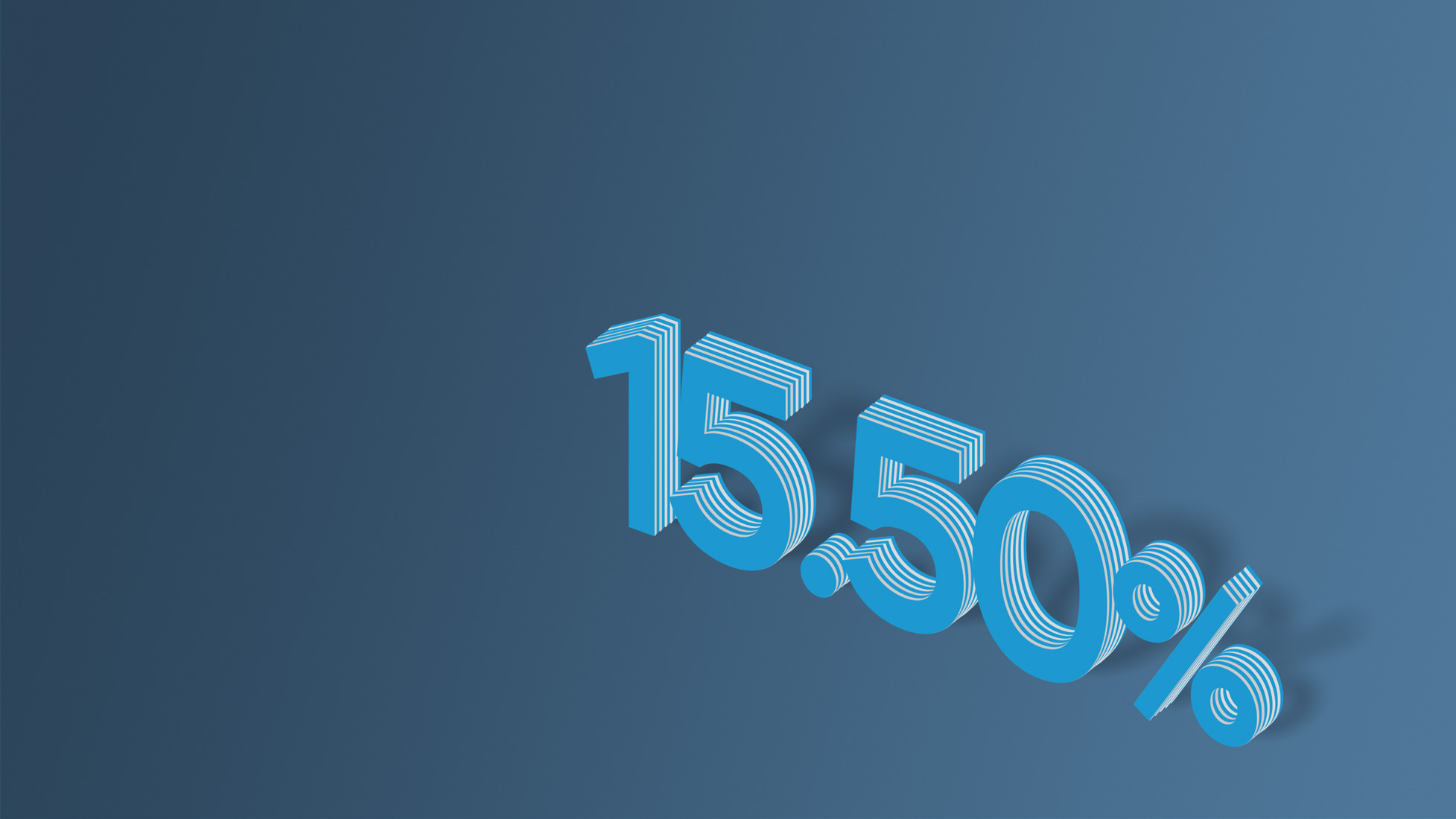
Following the discussion, on 13 February 2026, the Bank of Russia Board of Directors decided to cut the key rate by 50 bp to 15.50% per annum. The Bank of Russia will assess the need for a further key rate cut at its upcoming meetings, taking into account the sustainability of disinflation and the dynamics of inflation expectations.
The baseline scenario assumes that the key rate will average 13.5–14.5% per annum in 2026 and 8.0–9.0% per annum in 2027. As the effects of one-off factors fade and demand overheating gradually declines owing to the monetary policy pursued, disinflation will resume. The Bank of Russia forecasts that annual inflation will slow down to 4.5–5.5% in 2026. Underlying inflation will be close to 4% in 2026 H2. From 2027 and further on, annual inflation will stay at the target. GDP will increase by 0.5–1.5% in 2026. From 2027 onwards, the economy will be growing at a balanced rate of 1.5–2.5% per annum. More details on the Bank of Russia’s medium-term projections are available in the Commentary on the Bank of Russia’s Medium-term Forecast.
