
Discussants: members of the Bank of Russia Board of Directors, senior executives of the Monetary Policy Department, the Research and Forecasting Department, and other Bank of Russia Departments and Main Branches.
The Monetary Policy Department together with the Research and Forecasting Department presented the results of the analysis of the current economic developments nationwide and worldwide as well as the comparisons of the unfolding economic trends against the Bank of Russia’s April baseline macroeconomic forecast for 2026–2028 and its variations. The Bank of Russia Main Branches provided information on the situation in the Russian regions, including based on business surveys. Furthermore, the participants in the discussion considered the information from the Financial Stability Department and the International Settlements Department.
The discussants’ opinions are based on the data available as of 19 June 2026.
This Summary covers the key points of the discussion.
 Economic situation and inflation
In April–May 2026, current price growth declined to 2.1% (seasonally adjusted annualised rate, SAAR) on average from 8.7% SAAR in 2026 Q1. Core inflation over the same period decelerated to 4.2% SAAR on average from 6.2% SAAR in 2026 Q1. Households’ inflation expectations and businesses’ price expectations went down in June. Analysts adjusted their inflation forecasts for 2026 slightly downwards, while keeping those for 2027 unchanged. According to high-frequency data, economic activity indicators improved in 2026 Q2 after their decrease in 2026 Q1. The Bank of Russia’s Business Climate Index was up in 2026 Q2 vs 2026 Q1. In March–April 2026, the unemployment rate edged up to 2.2% (seasonally adjusted, SA). In March 2026, growth of nominal and real wages slowed down slightly, following its acceleration at the beginning of the year (YoY).
Current inflationary pressures eased in April–May, which was a reflection of the effects of both the monetary policy pursued and one-off disinflationary factors. Major contributors to the price growth deceleration were fruit and vegetable prices that fell much more notably over these two months than normally during this season. According to the participants in the discussion, seasonal trends of these prices have been volatile over recent years, with the timing and scale of their increases and declines varying from year to year. This could be attributable to a combination of factors, such as the condition and size of carryover stocks, supply of greenhouse products, changes in the geography of supplies, and weather conditions, including more pronounced temperature fluctuations. Another disinflationary factor was the ruble appreciation.
The discussion remained focused on the assessment of underlying inflationary pressures. In April–May, certain measures of underlying price growth still exceeded 4% SAAR, some of them were close to this level, while others dropped below it.
- A number of discussants argued that it would be premature to draw any conclusion about a further easing of underlying inflationary pressures. They were largely influenced by transitory factors over the past few months, most notably by the ruble appreciation in March–May. The latter was, to a great extent, associated with changes in global commodity markets, namely rising prices for Russian commodity exports and increased export earnings. Therefore, the drop in measures of underlying inflation, attributable to the exchange rate dynamics, might be temporary. It is impossible to completely exclude the effect of the exchange rate from these measures. The only option here is to compare price changes across components exhibiting different levels of exchange rate sensitivity. As for the components with low sensitivity, the deceleration in price growth was marginal. High growth rates of prices for non-administered services also indicated that underlying inflationary pressures remained persistently elevated. They are less responsive to exchange rate fluctuations and might reflect the state of domestic demand and cost pressures from wages.
- Other participants stated that the available data could evidence a decline in underlying inflationary pressures. In April–May, many measures of underlying price growth were considerably below the levels of 2025 Q2–2026 Q1. Although a stronger ruble was, indeed, partially associated with the impact of transitory external factors, it was also supported by longer-term ones, namely cyclical (tight monetary policy and a still high interest rate differential) and structural (including import substitution, residents’ limited opportunities to invest in foreign assets, and existing import restrictions) factors. In addition, cooling domestic demand, curtailed by tight monetary policy, contributed to the easing of underlying inflationary pressures.
Following the discussion, most participants concurred that underlying price growth had edged down, while remaining within the range of 4–5% SAAR overall.
The meeting noted that, based on incomplete weekly data, fruit and vegetable price dynamics reversed in June. This reversal could reflect an adjustment following a larger-than-usual drop in prices over the past few months.
The situation in the fuel market might affect inflation for longer than it did in the past. From
Households’ inflation expectations and businesses’ price expectations adjusted downwards following the decrease in inflation, which is because they are backward-looking in nature, that is, largely driven by observed price growth and declining as inflationary pressures ease. More expensive fuel has not yet pushed up inflation expectations. However, they remained elevated compared to the periods when inflation was close to 4%. This might increase the risk of second-round effects from one-off inflation factors and their spillover into a wide range of goods and services, which will hamper a further decline in underlying inflation.
In addition, the meeting pointed out that the July assessment of inflationary pressures should factor in the rescheduled indexation of housing and utility tariffs. In 2026, tariffs are raised in two stages. The first one was at the beginning of the year, while the bulk of the increase was rescheduled from July to October. Therefore, after the July 2025 indexation drops out from the calculation, the contribution of tariffs to annual inflation will be redistributed throughout the year due to the statistical effect, which, nevertheless, will not be evidence of easing inflationary pressures.
According to the Bank of Russia’s assessments, the economy continued to grow at a moderate pace in 2026 H1. As expected, following a slight economic downturn in 2026 Q1, caused by the calendar and weather factors, the same factors produced the opposite effect in 2026 Q2. A larger number of business days and favourable weather conditions supported economic activity, including in construction. Consumer activity was recovering as well in March–April. Due to the above, the discussants deemed it more appropriate to assess economic dynamics for 2026 H1 as a whole. According to the estimates, the expansion of output might reach about 0.5% YoY in 2026 H1.
The situation remained diverse across industries in 2026 H1. According to the meeting, the persistent differences were largely attributable to the structural transformation of the economy. Given limited resources coupled with faster growth of government demand, there was limited room for an increase in private demand, including investment demand. Such redistribution of demand and resources affected sectoral dynamics, with some industries demonstrating an upswing and others showing more modest dynamics. Additionally, the situation across sectors was influenced by short-term factors, namely changes in global commodity markets and a temporary contraction in production capacities in certain industries.
Consumer activity was up in March–April, following its weak dynamics in early 2026. The rebound in consumption was accompanied by, but not limited to, a rise in car purchases. Growing household incomes underpinned consumer demand.
Investment activity edged up in 2026 Q2 after falling notably in 2026 Q1. The discussants pointed to inertia in investment dynamics. Specifically, since changes in economic and financial conditions affect decisions to launch, suspend, or review investment projects with a time lag, investments recover gradually.
The labour market easing slowed down. According to recent surveys, the percentage of enterprises experiencing labour shortages has plateaued. The number of part-time workers facing downtime or about to be laid off has barely changed since the beginning of the year. Most of those laid off found jobs at other enterprises. Consequently, unemployment remained close to the historical minimum. Businesses’ plans to raise wages were becoming more modest. Nevertheless, growth of real wages continued to outpace that of labour productivity. However, wage dynamics varied across sectors. The participants pointed out that wage statistics are released with a lag of almost three months. Hence, these data might still not reflect a slowdown in wage growth that has started to take shape according to business surveys.
The meeting regarded the announced changes in fiscal policy as the materialisation of a key proinflationary risk. According to the Russian Ministry of Finance, the structural primary deficit will return to zero no sooner than in 2029, rather than in 2026 as previously planned. The discussants argued that, given limited physical resources, primarily labour ones, the expansion in government demand must be accompanied by more moderate dynamics of other components of domestic demand. Otherwise, additional demand would only lead to stronger inflationary pressures rather than cause a comparable increase in output. Therefore, a stronger fiscal impulse is limiting room for a further easing of monetary policy.
According to most participants in the discussion, the positive output gap closed in 2026 Q1. This was evidenced by a decline in many underlying inflation measures to levels close to 4% SAAR. Certain discussants, however, believed that the gap had not yet fully closed. According to their estimates, underlying inflationary pressures still exceeded 4%. Nevertheless, all participants concurred that there were no signs of overcooling in the economy, according to the available data. If that were the case, measures of underlying inflation would drop considerably below 4%, unemployment would rise, and real incomes would fall, none of which was observed. Certain discussants also noted that the rebound in consumer demand, a stronger fiscal impulse, and the slowdown in the labour market easing in 2026 Q2 could indicate that demand-side price pressures might intensify again. That said, the temporary contraction in production capacities in certain industries could lead to an increase in the positive output gap without an additional expansion of demand. Future dynamics of the output gap remain uncertain.
 Monetary conditions
Money market rates and OFZ yields at the short end of the curve went down over the period following the April meeting. Contrastingly, medium- and long-term OFZ yields were up. According to high-frequency data, deposit rates dropped in May–early June. Fixed interest rates on unsubsidised corporate loans edged down in April, while spreads between floating loan rates and the key rate barely changed. Interest rates on retail loans fell in April. The increase in the portfolio of retail and corporate loans accelerated in April–May (MoM), as compared to early 2026. The annual growth rate of money supply rose in April–May.
Most participants concurred that monetary conditions had eased somewhat since the April key rate meeting, while remaining restrictive overall.
The dynamics of market interest rates were uneven, although most segments of the financial market recorded their decline.
- Money market rates and OFZ yields at the short end of the curve went down following the key rate path. Contrastingly, medium- and long-term OFZ yields increased, driven by a higher term premium, which was predominantly due to the uncertainty regarding fiscal policy parameters. Considering these reasons, higher long-term yields did not signal monetary tightening. Certain participants in the discussion pointed to the steepening of the OFZ yield curve. The decline in yields at the short end, as compared to medium- and long-term yields, could indicate a decrease in monetary tightness.
- Interest rates on deposits continued to go down in response to monetary policy easing. That said, certain banks were raising deposit rates from the beginning of June, reacting to stronger demand for cash and lower growth rates of deposits.
- Corporate loan rates were declining steadily as well. The bulk of these loans were issued at floating interest rates, and therefore, their servicing costs were naturally dropping following the key rate. Fixed rates demonstrated a considerable decline in April, albeit mostly due to a higher share of disbursements at subsidised rates. Excluding subsidised loans, project financing, and other special transactions, fixed rates edged down, while remaining high, which reflected banks’ conservative approach to assessing borrowers’ credit risks.
- Interest rates on consumer loans decreased, while those on mortgages were up on account of a lower proportion of subsidised programmes in newly issued loans. Unsubsidised mortgage rates remained virtually unchanged.
The easing of price monetary conditions in real terms was less pronounced due to lower inflation expectations. At the same time, non-price lending conditions stayed restrictive.
The participants discussed the estimates of real interest rates in detail. They pointed out that a significant gap between nominal loan rates and the inflation rate is not per se evidence of an excessive monetary tightness. Part of loans are granted on soft terms and are thus less responsive to key rate changes. For example, since early 2025, over 25% of long-term corporate loans have been issued at interest rates lower than deposit ones. Therefore, a higher level of market rates is required to ensure the necessary restrictive effect on aggregate demand. In addition, it is more correct to assess real interest rates against inflation expectations, as decisions on saving and borrowing are made based on expected price growth.
Households’ saving activity was declining gradually, but remained high. Banks recorded an increase in retail deposits, accompanied by a shift from time deposits to savings accounts. Simultaneously, investments in securities and real estate were on the rise. According to certain discussants, real estate investments support the related demand for goods and services and may, therefore, have a stronger proinflationary effect than savings in bank accounts. Demand for cash also expanded considerably over the past few months, largely due to mobile internet disruptions and economic agents’ response to tax changes. Nevertheless, demand for cash was within the bounds of its historical range, with the share of cash in money supply rising only slightly and staying below the levels of late 2024. The transition from bank accounts to cash changes the structure but not the amount of money supply and does not per se create additional demand for goods and services.
In April–May, credit activity accelerated significantly, both in the corporate and retail segments. Corporate lending growth was broad-based. Credit activity was driven by a gradual decline in interest rates and the expectations of a further easing of monetary policy. In part, the acceleration could indicate a rebound following the weak dynamics of the beginning of 2026, related to changes in the seasonality of government expenditures. As for retail loans, the recovery was recorded not only in mortgages, but also in unsecured consumer and car lending, which was associated with easing monetary conditions as well.
The increase in the banking system’s claims on the economy (adjusted for foreign currency revaluation), accumulated since early 2026, remained within the range of growth rates observed in 2016–2019. However, the discussants were concerned about the acceleration of their expansion over the past few months. If credit continues growing at the current pace, its increase as of year end might exceed the April forecast. The participants paid particular attention to the combination of accelerated lending growth with a stronger-than-expected fiscal impulse.
Faster growth of credit and the expansion of budget expenditures since the beginning of the year have already translated into the dynamics of money supply. The growth rates of money supply (M2) were up, with its increase accumulated since early 2026 surpassing both last year’s growth rate and the upper bound of the 2016–2019 range.
The meeting discussed whether monetary conditions remained sufficiently restrictive. Some participants pointed to the steeper OFZ yield curve, deposit rates converging towards inflation expectations, as well as a faster rise in credit and money supply. Together, these signals could mean that monetary conditions came close to being neutral. However, most discussants believed that the upturn in lending was a natural result of the key rate reduction and did not per se indicate a transition to neutral or accommodative conditions. Whether monetary conditions are sufficiently tight should be determined based on their impact on aggregate demand and inflation. Lower inflationary pressures and inflation expectations were evidence of monetary policy remaining restrictive. Nevertheless, a stronger fiscal impulse might require more moderate growth of credit and private demand in the future for disinflation to continue. To achieve that, the Bank of Russia might need to maintain tight monetary conditions for a longer period than assumed in the April forecast.
The quality of the credit portfolio remains acceptable, while having deteriorated slightly. Overall, the corporate sector’s financial position remained stable. In 2026 Q1, the decline in companies’ profits accelerated, pulled down by low crude prices in early 2026 and weaker growth of domestic demand. The largest companies’ debt burden edged up, but stayed at a historically low level. The proportion of non-performing loans was hovering at 4% over the past six months, with large companies even recording its slight reduction since early 2025. SMEs faced a more pronounced deterioration, although the total amount of non-performing loans remained minor creating no systemic risks. Interest expenses of companies will go down following the key rate, as two-thirds of corporate loans were issued at floating rates. This will support borrowers’ financial resilience.
 External environment
According to high-frequency data, global economic growth was decelerating in 2026 Q2. Inflationary pressures in major economies intensified. Simultaneously, increased proinflationary risks stemming from the conflict in the Middle East led to an upward revision of expectations regarding policy rates in the key economies. Over the period following the April key rate meeting, the Brent crude price went down, while staying higher than the 2025 average. Prices for most other Russian exports significantly exceeded their last year’s averages as well. In May–early June, the ruble somewhat strengthened against the main currencies.
The developments in the global economy were generally in line with the April forecast. Its growth was slowing down, but remained relatively stable considering the scale of the commodity shock. For the time being, rising commodity prices had a more notable effect on inflation than on economic activity worldwide. Inflationary pressures were becoming stronger. More central banks were raising their policy rates and fewer of them were opting for rate cuts, which evidenced a reversal of the global monetary policy cycle. The meeting noted that this reversal meant a faster reduction in the interest rate differential between Russia and other countries.
Commodity markets demonstrated high volatility. In 2026 Q2, the export price for Russian crude exceeded the April forecast due to higher global prices. De-escalation in the Middle East and the correction of crude prices in June were overall in line with market expectations and the Bank of Russia’s forecast. Nevertheless, there is still uncertainty as to how the situation will be unfolding in the future.
Most participants agreed that crude prices were likely to stay elevated in the near future and would be decreasing gradually. The reduction in stocks during the conflict might delay the oil market’s transition to a surplus. However, certain discussants acknowledged the possibility of a more rapid decline in crude prices. High prices of the previous period encouraged other regions to expand production capacities and oil supply, which will enable a faster-than-expected replenishment of depleted stocks. Concurrently, the implications of the commodity shock for the world economy might lead to weaker demand for crude. As a result, the market balance may restore sooner.
In 2026 Q2, the current account balance came in substantially above last year’s level amid a rise in the value of exports. Imports were steadily expanding against the backdrop of a stronger ruble. The most notable upturn was observed in supplies of machinery, equipment, and land transport vehicles.
The ruble appreciation was driven by high export earnings of previous periods, taking into account the time lags. The meeting pointed out that the ruble was still bolstered by cyclical (a high interest rate differential and moderate demand for imports) and structural (import substitution, low demand for foreign financial assets, and import restrictions) factors. As the situation in the Middle East normalises, the impact of external transitory factors on the exchange rate will be abating gradually. That said, the effects produced by crude price fluctuations are largely offset by the fiscal rule, which limits their direct influence on the dynamics of the exchange rate and domestic demand.
The discussants noted that, external conditions mostly had a disinflationary impact on the Russian economy until now. Higher prices for a wide range of Russian exports pushed up export earnings and strengthened the ruble, while the rise in global commodity prices did not translate into domestic prices to any significant extent. The risk of a prolonged Middle East conflict has decreased, thus lowering the likelihood of proinflationary effects intensifying fast. That said, the changes in the external environment that have already occurred might still lead to weaker global economic growth and, consequently, to lower demand for Russian exports. Simultaneously, heightened global prices and logistics costs might accelerate price growth worldwide and push up the value of Russian imports. Therefore, with time, the proinflationary impact of external conditions might become more pronounced. The scale and timing of these effects remain uncertain.
 Inflation risks
The participants in the discussion concurred that proinflationary risks were still outweighing disinflationary ones over the medium-term horizon. Since the April meeting, the balance of risks has shifted towards proinflationary ones even more.
The main proinflationary risks include:
- A significant fiscal stimulus over the medium-term horizon. The proinflationary risk stemming from fiscal policy has actually materialised, but there is still uncertainty about the scale of the fiscal stimulus. The stronger it will be, the more restrictive effect monetary policy should produce on other components of domestic demand, including lending, to avoid an intensification of inflationary pressures. Another proinflationary factor might be an expansion of subsidised lending programmes, which weakens the effect of tight monetary conditions on demand.
- Renewed demand overheating. Aggregate demand might again deviate upwards from the capacities to ramp up output due to both fast growth of domestic demand and more severe supply-side constraints. A rapid increase in domestic demand might be driven by credit continuing to expand at the current pace, coupled with a stronger fiscal impulse. Labour shortages might also support high growth rates of wages, outpacing those of labour productivity.
- A temporary output contraction in certain industries. This risk has risen, including due to the situation in the fuel market. Higher fuel prices can affect inflation directly through costs of other sectors and inflation expectations as petrol is a salient item for households and companies.
- Persistently high inflation expectations. Elevated inflation expectations might slow down the decline in underlying inflation and amplify the second-round effects of certain one-off proinflationary factors.
- Deteriorating external conditions. The risk of a prolonged Middle East conflict has decreased, but there is still uncertainty regarding its consequences for global economic growth and inflation. Weaker growth of the world economy might constrain demand for Russian exports. An acceleration in external inflation might exacerbate inflationary pressures in the Russian economy through higher prices for imports.
The main disinflationary factor is:
- A notable slowdown in domestic demand growth. Tight monetary conditions coupled with a higher tax burden might have a more pronounced effect on demand dynamics than estimated. Business sentiment might worsen, with companies decreasing their investment, recruitment, and wage indexation plans more significantly. As a result, domestic demand growth may decelerate considerably, while inflation might notably deviate downwards from the target.
 Conclusions for monetary policy and the key rate decision
Following the analysis of the data and their assessment against the Bank of Russia’s April forecast, the participants discussed the following alternatives:
- keeping the key rate unchanged at 14.50% per annum;
- cutting the key rate by 25 bp to 14.25% per annum; or
- cutting the key rate by 50 bp to 14.00% per annum.
The main arguments of those who proposed keeping the key rate unchanged were as follows:
- Measures of underlying price growth in April–May could be understated. Their dynamics were largely driven by an additional strengthening of the ruble in March–May, attributable to a temporary improvement in global commodity markets. As for components characterised by low sensitivity to exchange rate fluctuations, the slowdown in price growth was less notable. Moreover, the rise in prices for non-administered services still significantly exceeded 4% SAAR. These trends could indicate persistent price pressures from domestic demand.
- Faster growth in motor fuel prices creates additional proinflationary risks and might lead to accelerating underlying inflation through higher costs and inflation expectations.
- Monetary conditions eased, possibly moving close to being neutral. The OFZ yield curve became steeper. In April–May, corporate and retail lending accelerated notably. Annual growth rates of money supply were up, with its increase accumulated since early 2026 surpassing the upper bound of the 2016–2019 range. The current degree of monetary tightness might be insufficient to bring inflation back to the target in line with the April forecast.
- Domestic demand might be rising faster than assumed in the forecast. Real wages continue to grow faster than labour productivity. Coupled with the increase in lending, this can underpin faster domestic demand growth. In 2026 Q2, consumer activity was already recovering.
- The structural primary deficit will persist until 2029, which means a stronger fiscal impulse in 2026–2028 than expected earlier. This amplifies proinflationary risks and might increase the estimate of the neutral rate of interest. To offset the impact of high government demand and ensure disinflation in line with the forecast, monetary conditions should remain tight for a longer period.
The main arguments of those who proposed cutting the key rate by 25 bp were as follows:
- Although the slowdown in price growth in April–May was largely driven by volatile components and the ruble appreciation, the monetary policy pursued also contributed to the easing of inflationary pressures, including in terms of underlying components. In April–May, many measures of underlying price growth were below the levels of 2025 Q2–2026 Q1.
- At the same time, proinflationary risks increased considerably, limiting room for a key rate reduction. The structural primary deficit will persist until 2029, which means a stronger fiscal impulse in 2026 –2028 than expected earlier. In addition, faster growth in motor fuel prices might push up growth rates of prices for a wide range of goods and services through higher costs and inflation expectations.
- Monetary conditions eased, while remaining tight. The rapid increase in lending over recent months does not per se mean that the restrictive effect of monetary policy has been exhausted. Moreover, higher credit growth rates in April–May might partially reflect a recovery following the weak dynamics at the beginning of the year and are a natural response to the recent monetary easing. Time is required to assess the sustainability of lending dynamics.
- The rise in economic activity indicators in 2026 Q2 is largely attributable to the opposite effect of the calendar and weather factors of 2026 Q1 and does not evidence any notable economic upturn. Overall, in 2026 H1, the economy was growing at a moderate pace.
- The labour market continues to cool steadily, although its easing has slowed down. In the past few months, labour shortages stopped declining, with the unemployment rate staying close to its all-time lows. To provide more confidence that inflationary pressures are easing sustainably, the dynamics of real wages and labour productivity should converge.
The main arguments of those who proposed cutting the key rate by 50 bp were as follows:
- In 2026 Q2, inflation ran below the Bank of Russia’s April estimates, including in terms of its underlying components. In April–May, most measures of underlying price growth were down, with some of them being close to or below 4% SAAR.
- Reviving domestic demand and higher economic activity indicators in 2026 Q2 largely reflect a rebound after the weak dynamics of early 2026. This recovery was factored into the baseline forecast, and its scale has so far been within the projected bounds. Overall, in 2026 H1, economic activity was growing at a moderate pace, with its dynamics remaining subdued.
- Monetary conditions have eased, but remain tight. The acceleration in lending growth is mostly a rebound after the weak dynamics of the beginning of 2026. There is still room for a key rate reduction without compromising the restrictive effect of monetary policy.
- The positive output gap closed in 2026 Q1. Output increased mainly in the sectors receiving government support. Even amid high budgetary expenditures in early 2026, inflation continued to slow down. This could indicate that the additional impact of fiscal policy on demand has so far been largely offset by tight monetary conditions.
- A stronger ruble will continue to produce a disinflationary effect, underpinned not only by transitory external factors, but also by longer-term cyclical and structural ones. The pass-through of the global commodity shock and higher logistics costs to domestic prices is likely to be less pronounced than the above effect.
When discussing the signal, the participants considered keeping it moderately dovish or giving no signal about further steps at all.
- Those in favour of keeping the key rate unchanged or cutting it by 25 bp proposed accompanying the decision with a moderately dovish signal, indicating that further key rate decisions will depend on the incoming data, economic developments, and the degree of the materialisation of proinflationary risks. According to them, there was still (albeit less) room for a key rate decrease, which should be reflected in the signal. Furthermore, the current key rate path allows further reductions until the end of the year.
- Those in favour of cutting the key rate by 50 bp suggested leaving the decision without any indication of future steps. They also believed that, considering heightened risks stemming from the fiscal system and the fuel market, the Bank of Russia had less room for a further key rate decrease and should therefore be more cautious in its communication. This would help prevent market participants from being overly optimistic about future key rate changes.
Following the discussion, most participants agreed that the improvement in current inflation dynamics created grounds for lowering the key rate. However, due to proinflationary risks that had materialised since the last meeting, there was less room for monetary policy easing. A 25 bp key rate cut enabled taking into account weaker inflationary pressures, while maintaining a cautious approach, considering the changes in the balance of risks. Keeping the key rate at the current level could increase the risk of excessive cooling in the economy and a subsequent considerable and prolonged deviation of inflation downwards from the target.
Nevertheless, all discussants stated that, given the available data and the materialisation of proinflationary risks, stabilising inflation at the target might require a higher key rate path than assumed in the April forecast.
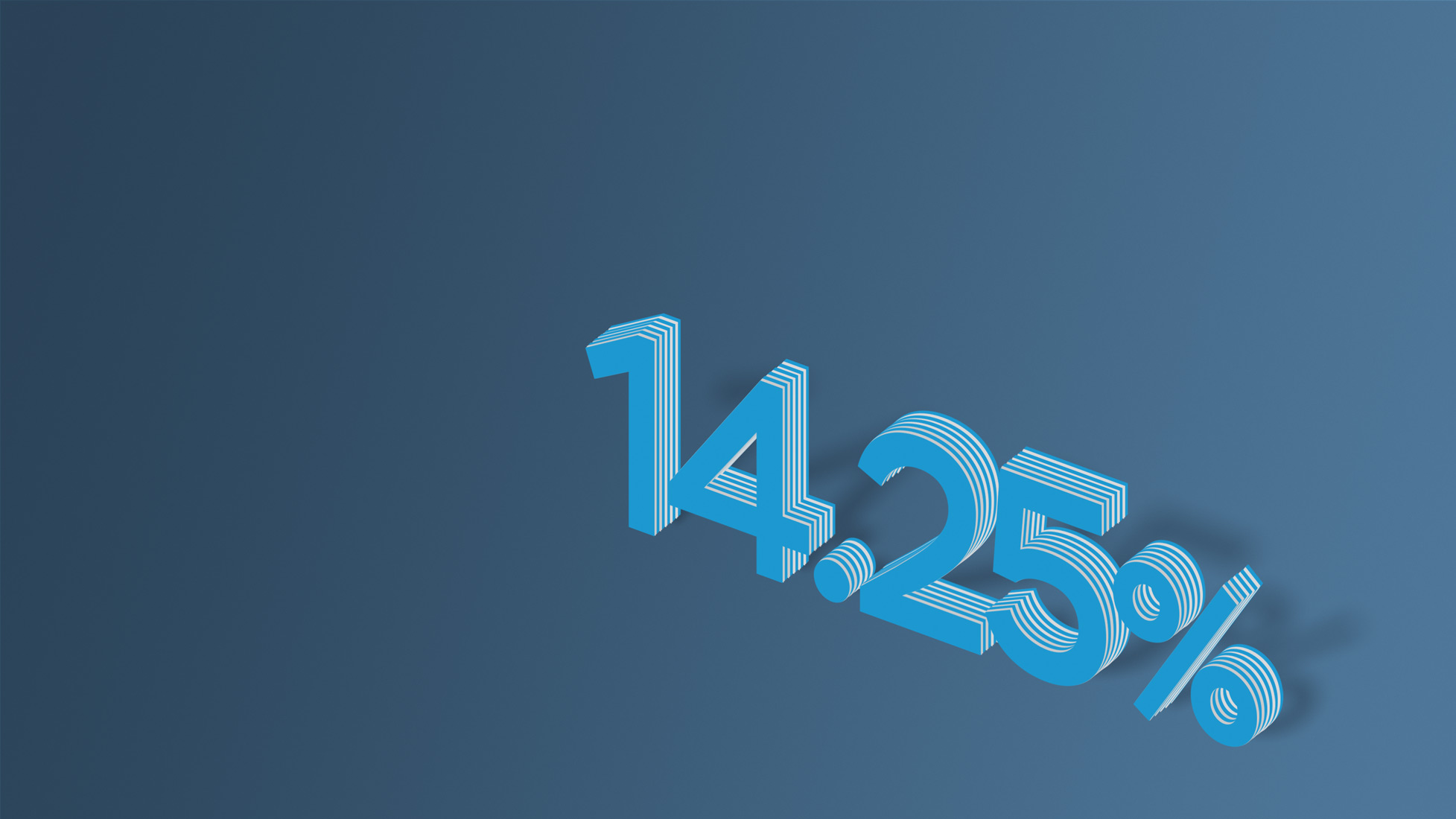
Following the discussion, on 19 June 2026, the Bank of Russia Board of Directors decided to cut the key rate by 25 bp to 14.25% per annum. The Bank of Russia will assess the need for a further key rate cut at its upcoming meetings depending on the sustainability of disinflation, the dynamics of inflation expectations, and the analysis of the risks posed by domestic and external conditions. The Bank of Russia forecasts that, given the monetary policy pursued, annual inflation will go down to 4.5–5.5% in 2026. Underlying inflation will be close to 4% in 2026 H2. From 2027 onwards, annual inflation will remain at the target.
