Better financial inclusion for people with disabilities: 2018 results
Over the past year the accessibility of financial institutions’ offices improved by 7 pp. However, more than 40% of people with disabilities still believe it is more difficult for them to use financial services than for other people, although this figure has decreased slightly, according to the second study by the NAFI Research Centre commissioned by the Bank of Russia and conducted in 2018. The results of the study for
The study showed that people with disabilities have similar issues to other consumers: insufficient financial literacy, no experience in digital services, and fear of fraud. Most obstacles they face are external: unprepared staff at financial institutions, a lack of specially adapted communication channels, and poorly equipped and inconvenient offices. Nonetheless, respondents with disabilities mentioned an improvement in the accessibility of financial institutions’ offices over the past year — 70% of them said that offices had become more convenient for people with disabilities: they were equipped with access ramps, railings and staff call buttons.
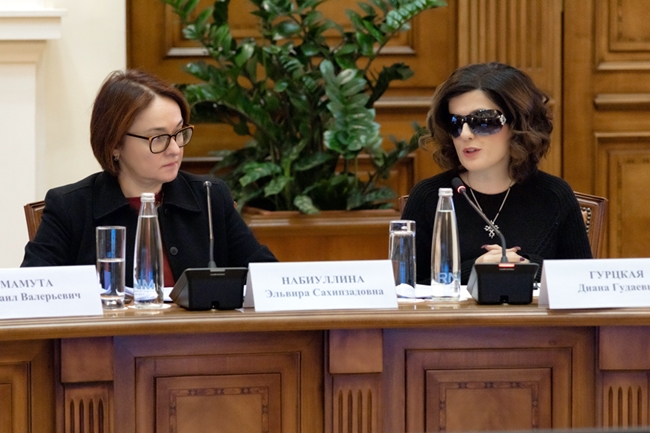
While assessing the results achieved by the working group in 2018, Bank of Russia Governor Elvira Nabiullina emphasised the regulators’ efforts in preparing the amendments to documentation, the adoption of which greatly facilitated the process of obtaining permits to build access ramps and elevators near the offices of financial institutions.
Development of remote financial services remains one of the most important parts of creating an inclusive financial environment. The Bank of Russia intends to continue to cooperate with the agencies concerned to finalise the Unified Biometric System for Remote Identification and join efforts to determine the most promising additional biometric features to be used by people with hearing, speech or intellectual disabilities.
According to experts, only one third of respondents use remote access channels (which is lower than among Russians in general), and the majority of elderly people with disabilities (78%) had never used remote access to financial services. ‘We understand that financial technologies offer people more opportunities in terms of financial inclusion,’ Bank of Russia Governor Elvira Nabiullina said in her speech. ‘However, we need to put more effort into developing inclusive financial products and teaching people with disabilities how to safely use products based on these new technologies’.
Many respondents said that they had difficulty in understanding services related to payment cards and loans; almost one fourth of them considered these services risky and unreliable.
Mikhail Mamuta, Head of the Bank of Russia Service for Consumer Protection and Financial Inclusion, said that to improve the situation the regulator has developed specialised courses on financial literacy for people with disabilities, created teaching guidelines for financial awareness volunteers intending to work with those people, and provided methodological assistance to credit institutions that train their staff in these skills to better serve people with disabilities.
The regulator is also focusing on another important area: an employment programme for specialists with disabilities. In 2018, the Bank of Russia started hiring specialists with disabilities to work in the Single Contact Centre, and it intends to continue to expand the programme. Moreover, the regulator took part in the development of the two new financial competencies that were introduced during the National Professional Excellence Championship for People with Disabilities (the national Abilympics) with the aim that the winners of both the regional and federal championship rounds go on to be part of the candidate pool for Russian financial institutions in 2019.