Bank of Russia to rank lenders based on disabled access
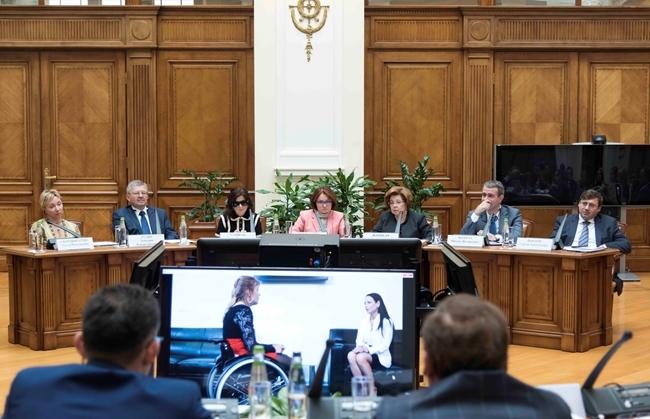
The regulator intends to work with NGOs of the disabled and the banking communities to develop criteria for measuring how a credit institution is accessible to disabled, mobility impaired and elderly people. The initiative, put forward by BoR Governor Elvira Nabiullina, gained support from executives of Russia's top ten banks. They came together to take part in the special workshop the Bank of Russia hosted on 26 June 2017, aimed to work out a disability strategy and assess the challenges that face disabled people when using banking services.
The BoR Governor spoke further about the need to ensure that new technology and digital services are accessible to consumers with various disabilities at the start of their rollout. Elvira Nabiullina also told the executives about the behavioural supervision system, a new Bank of Russia initiative to provide a framework for assessment of lender and customer interaction including accessibility grading.
Mikhail Mamuta, Head of the BoR Service for Protection of Financial Services Consumers and Minority Shareholders, told the workshop participants about a dedicated channel the Service has established to handle complaints and applications from disabled people, in a move enabling the regulator to track trends, best practices and the challenges of servicing impaired customers.
The workshop agenda included a discussion of barriers that people with disabilities or limited mobility must overcome when seeking financial services. Best practices in this area were an area of particular focus, including the priority task of removing the ‘attitude factor’ – a key barrier stemming from the failure to understand the needs and difficulties of people with disabilities. Diana Gurtskaya, a Civic Chamber member, made a presentation on ‘kindness training’ for schoolchildren (lessons intended to improve disability awareness); she spoke of the willingness of disability associations to share these lessons with bankers. The presentation by Maksim Larionov of the All-Russian Society of the Deaf was focused on a new social approach towards disability awareness which views the existing barriers in the environment as the real impediments to a disabled person’s life, rather than his or her physical condition. Maksim Larionov went on to suggest that services to the deaf should be improved with the help of sign language interpreters. According to Mikhail Novikov, a representative of the regional disability association ‘Perspektiva’, the development and launch of any technical upgrades to the customer service environment should involve direct feedback from disabled experts in order to avoid design flaws that could render an innovation useless or difficult to use. According to Anatoly Popko, who spoke on behalf of the Ostrovsky Integration Cultural Centre, deaf customers are often declined payment cards. The expert spoke out against the rollout of special bank branches to service disabled customers, which are known to cause segregation and lead to partial isolation of the population.
According to presidential adviser Aleksandra Levitskaya, improved financial inclusion will create equal career opportunities, provide disabled people with entirely new economic prospects and help them integrate into society.
First Deputy BoR Governor Sergey Shvetsov suggested that the top ten banks’ executives explore the employment of experts with disabilities so that the banking community better understands the problems of customers with special needs. Some bank executives spoke on their organisational experience of creating an accessible environment; this was followed by a Q&A session. It was stated in the course of the discussion that disability-friendly financial services have an undifferentiated target audience, which can help any bank seeking to extend its customer base.